Almost 60 years later, venal self-serving governments continue to promote moral panic and public hysteria perpetrating policies they know perfectly well don’t work. The same policies that achieve nothing but empowerment of thugs inside and outside of governments, all at the expense of those who make personal choices different to the mainstream. Or those with substance abuse issues.
There is no appeal to our better angels. There remains a direct appeal to the worst of our natures.
All over a private and personal issue, for what people do with their own lives in their own time with their own money.
The best book ever written on drug policy is Chasing the Scream: The First and Last Days of the War on Drugs, by British journalist Johann Hari.
Simple as that.
A pity governments pay no heed to the best and brightest.
The book attracted a torrent of praise from many high profile figures.
“Johann Hari’s book is the perfect antidote to the war on drugs, one of the most under-discussed moral injustices of our time. It combines rigorous research and deeply human story-telling. It will prompt an urgently-needed debate.”
Glenn Greenwald, winner of the Pulitzer Prize
Western governments have created the perfect conditions for drug epidemics — low levels of community engagement and social cohesion — while putting the jackboots through the lives of those they consider disposable. In their attempts to hold on to power, they are perfectly happy to sacrifice the welfare of their citizens.
Below is an extract from Chasing the Scream, published by A Sense of Place Magazine courtesy of the author.
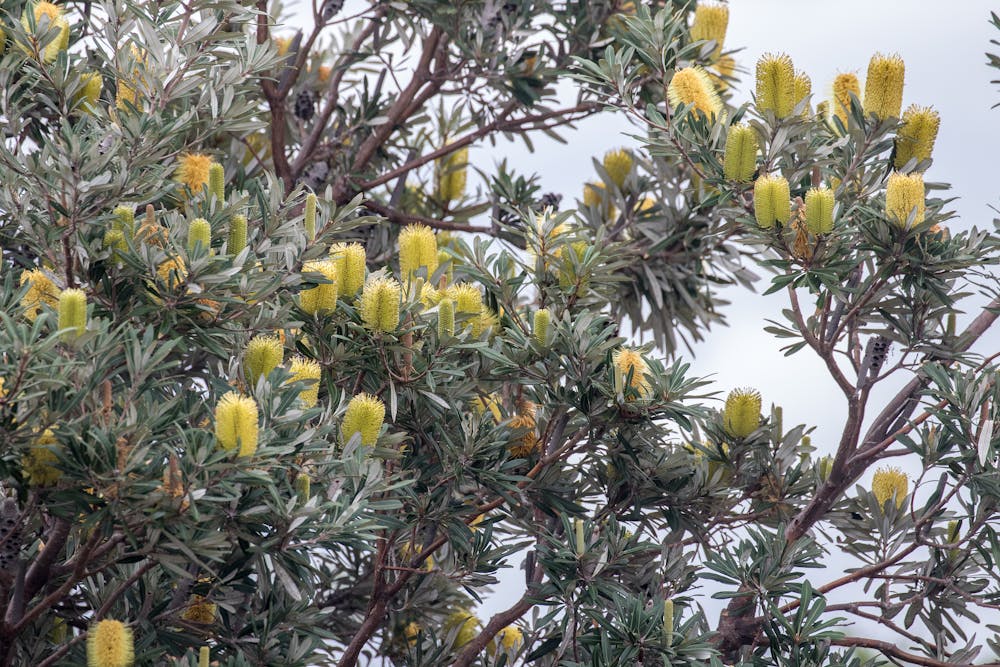
Australia's Coastal Banksia has Roots in Ancient Gondwana
By Gregory Moore, University of Melbourne
If you fondly remember May Gibbs’s Gumnut Baby stories about the adventures of Snugglepot and Cuddlepie, you may also remember the villainous Big Bad Banksia Men (perhaps you’re still having nightmares about them).
But banksias are nothing to be afraid of. They’re a marvellous group of Australian native trees and shrubs, with an ancient heritage and a vital role in Australian plant ecology, colonial history and bushfire regeneration.
The genus Banksia has about 173 native species. It takes its name from botanist Sir Joseph Banks, who collected specimens of four species in 1770 when he arrived in Australia on board Captain Cook’s Endeavour.
One of the four species he collected was B. integrifolia, the coastal banksia. This can be a small to medium tree about 5m to 15m tall. In the right conditions, it can be quite impressive and grow up to 35m.
It’s found naturally in coastal regions, growing on sand dunes or around coastal marshes from Queensland to Victoria. These can be quite tough environments and, while B. integrifolia tends to grow in slightly protected sites, it still copes well with sandy soils, poor soil nutrition, salt and wind.
TOTT News: New online Task Force will Target Critical Thinkers
The Department of Foreign Affairs and Trade will establish a new taskforce to counter “online disinformation campaigns”, in a bid to further clamp down on social media activities.
The move comes as the Australian Communications and Media Authority (ACMA) hands down a report naming bushfire and COVID-19 ‘conspiracies’ as a main source of disinformation.
‘DISINFORMATION TASKFORCE’
It has been announced that a new taskforce with the aim of “combating disinformation campaigns” will be established within the Department of Foreign Affairs and Trade (DFAT).
DFAT has begun a recruitment process for the new branch, which will target online propaganda on social media, according to ABC News.
As Benjamin Franklin once said: “Those who would give up essential Liberty to purchase a little temporary Safety, deserve neither Liberty nor Safety.”
The 6×6 Global Talent Program from the World Press Photo Foundation recognises six visual storytellers from six global regions, to highlight talent from around the world and present stories with diverse perspectives.
Launched in 2018, the initiative completed its first cycle last year, spotlighting 36 talents from six global regions.
The Foundation has now presented six new talents from Africa: Amilton Neves Cuna, Mozambique; Esther Ruth Mbabazi, Uganda; Etinosa Yvonne, Nigeria; M’hammed Kilito, Morocco; Seif Kousmate, Morocco; and Zinyange Auntony, Zimbabwe.
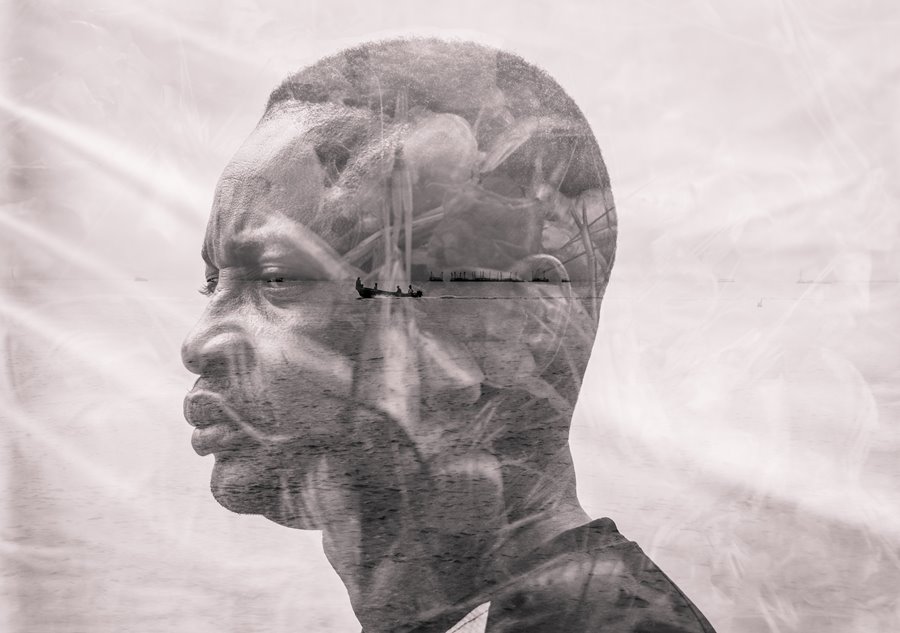
Etinosa Yvonne
“I went fishing and when I returned I saw thick smoke; I saw that my house had been burnt. Four of my kids suffered burns. I took them to the hospital and they stayed there for a month. My wife’s shop was also not spared; all her goods were burnt. I was a successful fisherman and all that changed in one day. I’m not happy at all, sometimes I pray for death. I can barely take care of myself nor my children. I lost everything I had, I’m not happy”. – Jimoh Boton (35), Lagos, Nigeria, 5 September 2018. Full Story: http://asenseofplacemagazine.com/africa-world-press-photo-foundation/ +++ http://asenseofplacemagazine.com/grass-trees-arent-grass-and-theyre-not-trees/ Grass Trees Aren't Grass and They're not Trees
By John Patykowski, Deakin University
Grass trees (genus Xanthorrhoea) look like they were imagined by Dr Seuss. An unmistakable tuft of wiry, grass-like leaves atop a blackened, fire-charred trunk. Of all the wonderfully unique plants in Australia, surely grass trees rank among the most iconic.
The common name grass tree is a misnomer: Xanthorrhoea are not grasses, nor are they trees. Actually, they are distantly related to lilies.
Xanthorrhoea translates to “yellow flow”, the genus named in reference to the ample resin produced at the bases of their leaves.
Wander through remnant heathland or dry sclerophyll forest, particularly throughout the eastern and south-western regions of Australia, and you’ll likely find a grass tree.
Late last year I began working on a piece marking 25 years since the publication of what I believed to be the most prescient work of the age.
The book had been published in Britain in the spring of 1995 but as February and then March 2020 came and went, we were all rather distracted. For a few months the pandemic was so overwhelming that even normal politics died down — only for it to inflame again, more incendiary and toxic than ever, at the beginning of June.
Here was a revolution backed by almost all billion-dollar businesses and public institutions bar the US presidency, and whose leaders had almost nothing to say about poverty or unemployment.
Their demands were for more diversity and racial equality, already sacred ideas among the cognitive elite, all of it accompanied by bizarre, quasi-religious public declarations of faith.
The Australian Strategic Policy Institute Behind Push for More Defence Spending
By Marcus Reubenstein with Michael West Media
Funded by the Department of Defence, the Australia Strategic Policy Institute collects millions more as it drives the “China threat” narrative. As Marcus Reubenstein reports, while ASPI is the media’s go-to experts for public comment, ASPI is remarkably coy about revealing all its funding sources.
On the day the Prime Minister Scott Morrison announced a $270 billion defence spending plan, the Department of Defence paid the Australian Strategic Policy Institute (ASPI) a $214,500 contract for “management advisory services”.
Exactly one year ago today, it was awarded a similar “management advisory services” contract for the considerably larger amount of $614,536.
ASPI has pushed hard for boosts to defence spending, in particular an upgrade of Australia’s missile capabilities.
The Government says it will spend $800 million on the US-made AGM-158C Long Range Anti Ship Missile, manufactured by Lockheed Martin, which gave ASPI $135,909 in sponsorship funds in 2018-19.
“For once you have tasted flight you will walk the earth with your eyes turned skywards, for there you have been and there you will long to return.”
Leonardo da Vinci
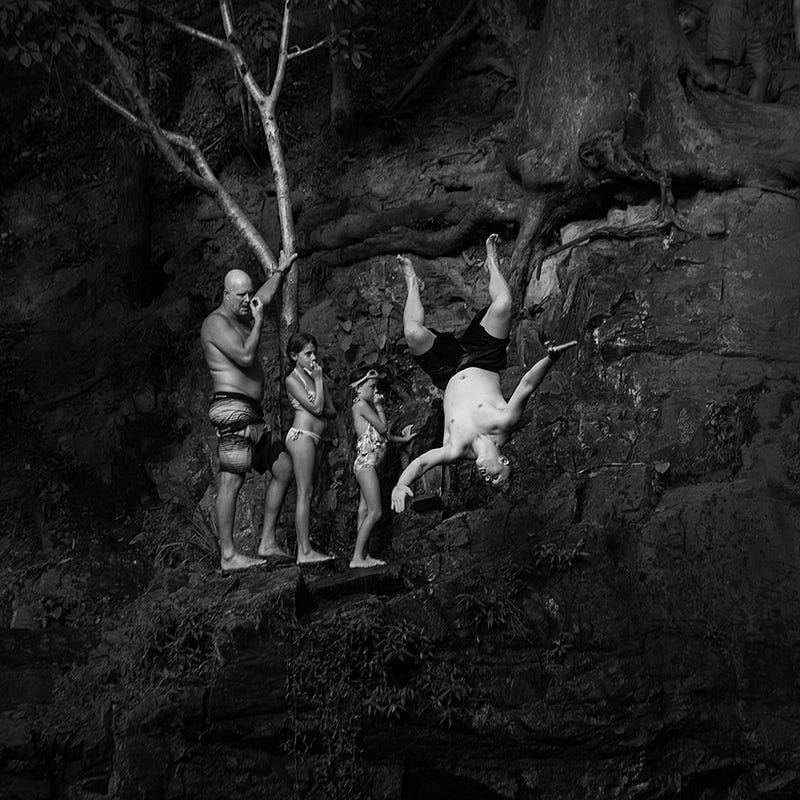
The Currumbin Valley Rock Pools are about five minutes from where I live. I started this project about four years ago. I was working full time with News Corp and tired of travelling with so much camera gear. And always being somewhere else.
I wanted to do something that was close to home and that was a project. Something that wasn’t an assignment. And with only one camera.
We used to go to these rock pools all the time as a family. And when you’re there, you can’t help but notice all the people clambering over the rocks and in various stages of jumping, and climbing.
And I thought, man, this is a beautiful place.
I started looking at people jumping, and that moment before they hit the water. It was quite amazing looking at their faces and body shapes, and that’s when I thought, I’m going to do a story on the rock pools.
By Jonathan Benjamin, Flinders University; Geoff Bailey, University of York; Jo McDonald, University of Western Australia; Michael O’Leary, University of Western Australia and Sean Ulm, James Cook University
For most of the human history of Australia, sea levels were much lower than they are today, and there was extra dry land where people lived.
Archaeologists could only speculate about how people used those now-submerged lands, and whether any traces remain today.
But in a study published today in PLOS ONE, we report the first submerged ancient Aboriginal archaeological sites found on the seabed, in waters off Western Australia. The great flood
When people first arrived in Australia as early as 65,000 years ago, sea levels were around 80m lower than today.
Sea levels fluctuated but continued to fall as the global climate cooled. As the world plunged into the last ice age, which peaked around 20,000 years ago, sea levels dropped to 130m lower than they are now.
The comforting belief that democratic freedoms have history on their side and will eventually prevail everywhere has always been tinged with wishful thinking.
World events of the past two or three decades have shown that we can no longer take these things for granted. Universal human rights, democratic practice and the rule of law have powerful enemies, and China under the Chinese Communist Party is arguably the most formidable. The Party’s program of influence and interference is well planned and bold, and backed by enormous economic resources and technological power.
The wide-ranging campaign of subverting institutions in Western countries and winning over their elites has advanced much further than Party leaders might have hoped. Democratic institutions and the global order built after the Second World War have proven to be more fragile than imagined, and are vulnerable to the new weapons of political warfare now deployed against them.
The Chinese Communist Party is exploiting the weaknesses of democratic systems in order to undermine them, and while many in the West remain reluctant to acknowledge this, democracies urgently need to become more resilient if they are to survive.
The threat posed by the CCP affects the right of all to live without fear. Many Chinese people living in the West, along with Tibetans, Uyghurs, Falun Gong practitioners and Hong Kong democracy activists, are at the forefront of the CCP’s repression and live in a constant state of fear.
Governments, academic institutions and business executives are afraid of financial retaliation should they incur Beijing’s wrath. This fear is contagious and toxic. It must not be normalised as the price nations have to pay for prosperity.
Every Western democracy is affected. As Beijing is emboldened by the feebleness of resistance, its tactics of coercion and intimidation are being used against an increasingly broad spectrum of people. Even for those who do not feel the heavy hand of the CCP directly, the world is changing, as Beijing’s authoritarian norms are exported around the globe.
When publishers, filmmakers and theatre managers decide to censor opinions that might ‘hurt the feelings of the Chinese people’, free speech is denied. A simple tweet that upsets Beijing can cost someone their job.
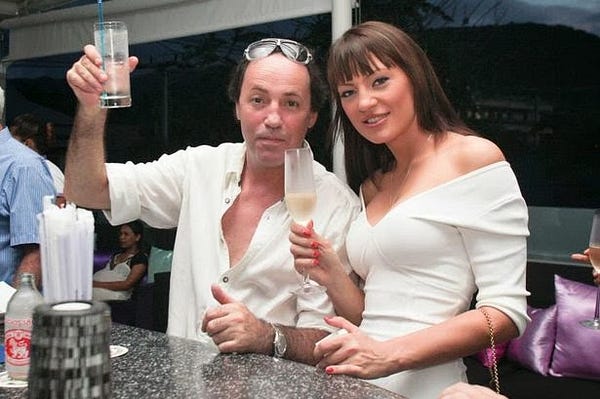
Walter ‘Whacky’ Douglas looked like he was having a fine old time when he was arrested and deported from Thailand in 2014.
Douglas, known as “The Tartan Pimpernel” and once described as one of Britain’s ten wealthiest drugs traffickers, disappeared from official view in the late 1990s after a career linked to narcotics. As one of the world’s principle centres for opium trafficking in the 19th Century, heroin in the 20th Century and methamphetamines in the 21st Century, and with easily bribed officials, Thailand has long proven a comfortable hideout for smugglers.
When he was tracked down to the island of Koh Samui in 2013 Douglas claimed stories about him were grossly exaggerated. “No charges are pending,” he said.
But early in 2014 police raided The Tartan Pimpernel’s villa on the north coast of Koh Samui as well as his nightclub Dreamers, where he went under the name of Bobby Brown.
Whacky Douglas was flown to Bangkok and put on a London bound plane which was met at Heathrow by officers of the National Crime Agency.
Bangkok based British journalist Andrew Drummond wrote that Douglas’s deportation and arrest in police custody had caused a panic among a group of British expats, known to British police, living in an enclave in Bang Rak, Koh Samui, just five minutes from the airport.Courtesy of Buddy Tour All Access Pass
Other expats from Bang Rak had been arrested when they returned to the U.K.
Douglas began his working life as a milkman in Glasgow. He didn’t stay there for long. His record includes arrest and time served for smuggling 18 tonnes of hash, along with ecstasy and cocaine, as well as money laundering to the tune of £150 million, of which he was acquitted. He was also charged with travelling on a false passport.
Douglas was also one of many people interviewed in connection with the 1990 murder in Marbella of Great Train Robber Charlie Wilson. He spent his time between Thailand and southern Spain, where he also owned Dreamers clubs.
“What is the appropriate behaviour for a man or woman in the midst of this world, where each person is clinging to his piece of debris? What’s the proper salutation for people as they pass each other in this flood?” Anon.
In recent months, food security concerns have emerged for nations across Africa, Asia and the Middle East, as swarms of desert locusts wreak havoc on crops.
While the same level of damage isn’t currently being felt in Australia, the threat of infestations extends to us too. But drone technology is offering up solutions. Not just a Biblical threat
In January, the United Nations Food and Agriculture Organisation (FAO) warned rising locust numbers in the Horn of Africa presented an “extremely alarming and unprecedented threat” to food security and livelihoods.
According to the FAO, a swarm of about 40 million desert locusts can eat the same amount of food in one day as about 35,000 people. Swarms can be as large as several hundred square kilometres, with as many as 80 million adults per square kilometre.
Countries impacted by infestations this year include Ethiopia, Kenya, Uganda, Somalia, India, Pakistan, Iran, Yemen, Oman and Saudi Arabia.
The role of the Silicon Valley tech companies in manipulating public opinion during the Corona lockdowns has thrown a harsh light straight back on their own conduct. The creation of at scale emotional contagion and high levels of compliance in populations, all at the behest of governments and their intelligence agencies, will as sure as night follows day become one of the next scandals to envelop the unfolding catastrophe of Covid-19.
Only six weeks ago eminently learned academics and well qualified doctors who were querying the wisdom of lockdowns and the financial chaos they create found themselves censored or deleted.
Fast forward through this panic in time and the lockdowns are now routinely being called a reckless and dangerous social experiment, “the biggest mistake in history”. How did quarantining the healthy and crashing national economies ever make any sense as public health policy?
Tens of millions of people around the world now find themselves without work and entire societies face another Great Depression.
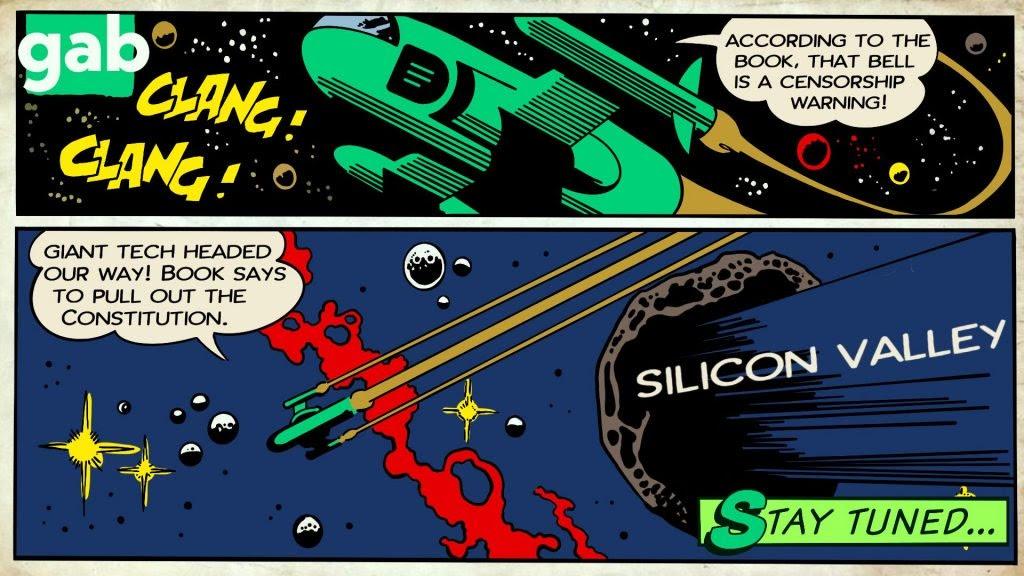
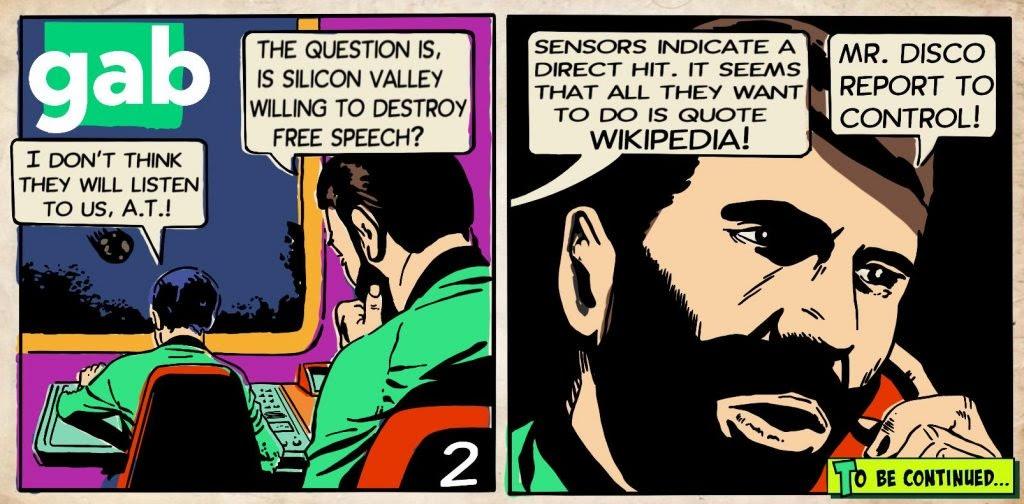
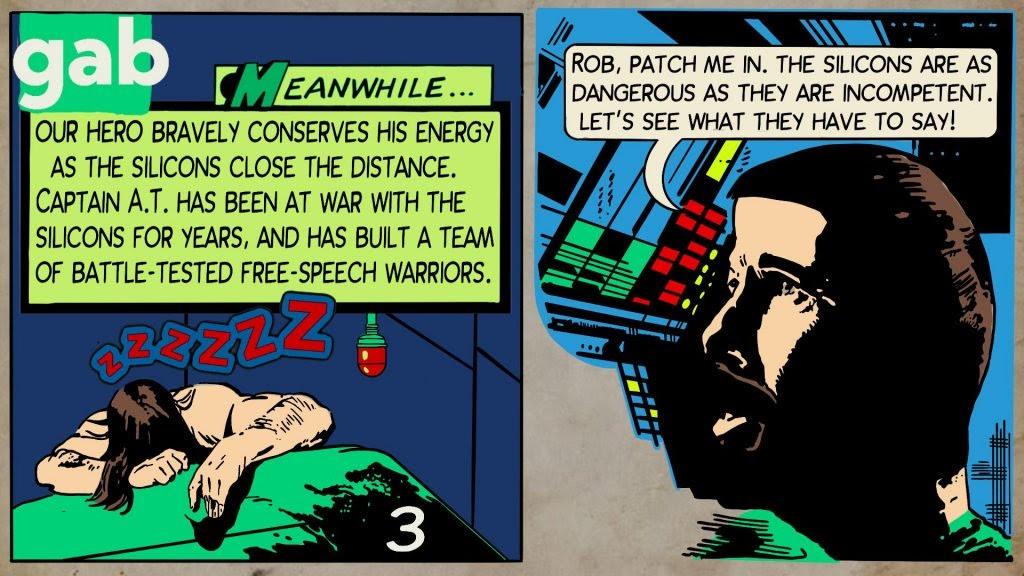
Silicon Valley, once seen as the centre of progressive politics, attracting the smartest of the smart, played a significant role in creating compliant populations and is now a target for critics around the world.
It’s an ill-wind, as the old saying goes, and one of those to benefit from the blatant attempts to control and manipulate the public narrative has been free speech social media platform Gab.
The site claims that more than 1000 people an hour have been joining it since Twitter made the decision to fact-check two of Donald Trump’s tweets.
The intervention infuriated Trump.
As a result Trump issued an Executive Order requiring the Federal Communications Commission to review the protections provided to online platforms under Section 230 of the Communications Decency Act.
Section 230 has allowed companies like Facebook and Twitter — and Gab — to avoid legal liability for the material their users post.
The Executive Order declared: “It is the policy of the United States that the scope of that immunity should be clarified: the immunity should not extend beyond its text and purpose to provide protection for those who purport to provide users a forum for free and open speech, but in reality use their power over a vital means of communication to engage in deceptive or pretextual actions stifling free and open debate by censoring certain viewpoints.
“Free speech is the bedrock of American democracy. Our Founding Fathers protected this sacred right with the First Amendment to the Constitution. The freedom to express and debate ideas is the foundation for all of our rights as a free people.
“In a country that has long cherished the freedom of expression, we cannot allow a limited number of online platforms to hand pick the speech that Americans may access and convey on the internet. This practice is fundamentally un-American and anti-democratic. When large, powerful social media companies censor opinions with which they disagree, they exercise a dangerous power. They cease functioning as passive bulletin boards, and ought to be viewed and treated as content creators.
“The growth of online platforms in recent years raises important questions about applying the ideals of the First Amendment to modern communications technology. Today, many Americans follow the news, stay in touch with friends and family, and share their views on current events through social media and other online platforms. As a result, these platforms function in many ways as a 21st century equivalent of the public square.
“Twitter, Facebook, Instagram, and YouTube wield immense, if not unprecedented, power to shape the interpretation of public events; to censor, delete, or disappear information; and to control what people see or do not see.
“As President, I have made clear my commitment to free and open debate on the internet. Such debate is just as important online as it is in our universities, our town halls, and our homes. It is essential to sustaining our democracy.
“Online platforms are engaging in selective censorship that is harming our national discourse. Tens of thousands of Americans have reported, among other troubling behaviors, online platforms “flagging” content as inappropriate, even though it does not violate any stated terms of service; making unannounced and unexplained changes to company policies that have the effect of disfavoring certain viewpoints; and deleting content and entire accounts with no warning, no rationale, and no recourse.”
Gab has been making the most of the Twitter contratempt by rolling out the red carpet for the president, with an account that has already amassed over 37,000 followers.
The account has the same handle and profile picture as Trump’s Twitter account and is mirroring his Twitter posts without interference.
In an email sent to its members on Wednesday night, Gab said that it was “a historic day” for the social network and that it had “reached out to the Trump campaign to let them know that we have an account for the President.”
Gab has been criticised as a “fringe” platform, a far-right social network filled with conspiracy theories, racism and antisemitism.
Founder Andrew Torba is the former CEO of an advertising technology company called Kuhcoon. He was just 25 when he launched Gab back in 2017, saying as a conservative he felt out of place in Silicon Valley and became increasingly concerned about online censorship and political bias.
“Every major communication outlet, every major social network, is run, owned, controlled and operated by progressive leaders, progressive workers in Silicon Valley,” he said.
The site came to national prominence in 2018 when the suspect in the Tree of Life synagogue shooting in Pittsburgh posted an anti-Muslim screed on Gab hours before shooting and killing 11 people.
While Gab was taken offline in the aftermath of the shooting, it came back online soon after and has since thrived.
Here is message to Gab users Andrew Tobin wrote this week:
Gab is a free speech software company. We build open source software with the primary purpose of conserving and exporting the uniquely American value of free speech to the world online.
Our most popular product is Gab.com, our social media platform with millions of users from around the world. On Gab the rules are simple: if it’s legal speech, it’s allowed. Illegal content and activity is not allowed.
Gab also follows American privacy law in regards to protecting user data. We believe that privacy is a human right and that the dignity of a sovereign individual should be respected.
We don’t just say these things, we actively defend these values everyday. For example we regularly protect the privacy of international Gab users by turning down speech-related data requests.
On a regular basis foreign governments attempt to censor or no-platform individuals on Gab for “offensive” or “hateful” speech that is 100% protected by the first amendment and our user guidelines. We reject these requests and in doing so are exporting American freedoms to people all over the world on the internet.
We are also proud of our relationship with US law enforcement and the balance of due process, privacy, and free speech to keep criminal activity out of our community.
For over three years now the mainstream media and establishment players in the Silicon Valley cabal have smeared Gab because they do not share our values.
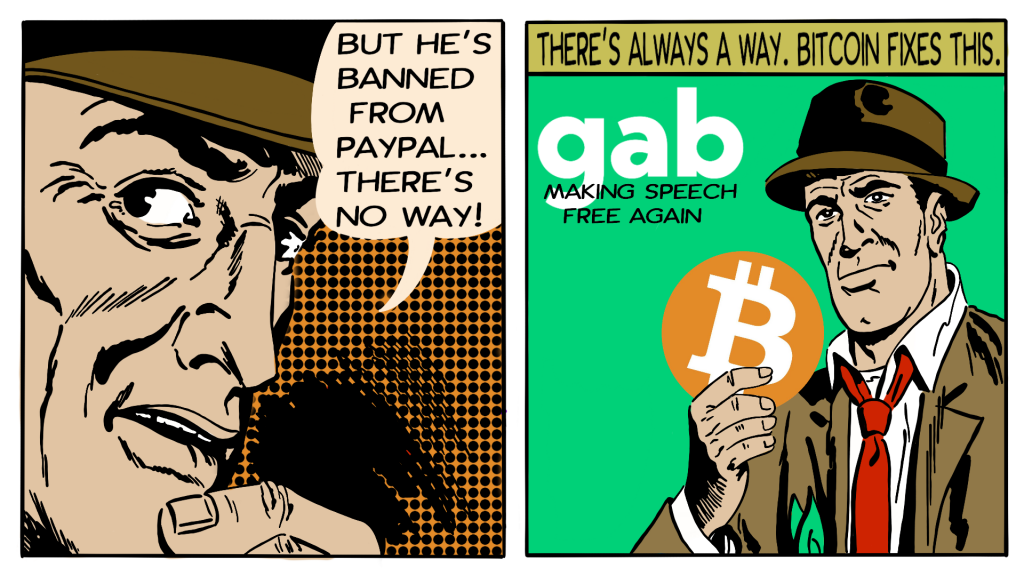
For holding the values described above, Gab has faced unique challenges on our journey. We have been no-platformed from dozens of service providers including both app stores, hosting providers, domain registrars, payment processors, and even banks. We’ve overcome these challenges by building our own infrastructure and by leveraging censorship-resistant technology like bitcoin.
The rise in the censorship of American citizens by American corporations and the subversion of democracy by those same US corporations is harrowing to me as a Christian American. Silicon Valley companies do not share my Christian values and indeed have a consistent history of silencing Christians online.
Twitter then quickly announced that they will be removing the ability to like, reply, or repost President Trump’s tweets that are “abusive” according to their standards.
This isn’t “democracy” and it certainly isn’t “normal.”
Big Tech’s unchecked power to dictate who can speak, who can make money, and who can exist online is only part of the bigger picture.
Big Tech is curating and editorializing the legal political speech of American citizens and limiting the reach and engagement of the President of the United States.
Big Tech is socially engineering the American electorate.
Studies have shown that biased Google search results can swing and influence elections. Facebook has admitted to conducting psychological experiments on users. Facebook is building a literal mind reading device. Google was working with China to build a censored search engine. Pinterest censored pro-life and Christian content from their site.
Silicon Valley’s bravado has also inspired the Chinese government to project their values of censorship, communism, and control on millions of Americans online.
Many of the top mobile game and mobile apps are owned and controlled by the Chinese. Apps like Tiktok have already censored content that criticizes the Chinese government, but not just in China. They are doing it to Americans too.
These two versions of the internet are different sides of the same tyrannical coin. This corporate or foreign state-controlled internet isn’t the internet I want my daughter to grow up with. This isn’t the internet the people of the world deserve.
On Gab users are not the product, they are the customer. Gab monetizes by selling an optional service called GabPro. For the cost of a cup of coffee every month, GabPro users can get verified and unlock additional features.
We also offer a free speech browser that automatically blocks all Big Tech ads and trackers. The browser includes a universal comment section across the entire internet. Users can comment on any URL and also see what others are commenting.
What we all need to realize is that together we vastly outnumber Silicon Valley. They only control us only as long as you and I continue to let them do it. I refuse to allow it any longer.
Written and compiled by John Stapleton, editor of A Sense of Place Magazine. A collection of his journalism can be found here.
On 26 May, Chief Medical Officer Brendan Murphy said if Australia’s mortality rate matched the UK’s, we’d have had 14,000 Covid-19 deaths. This is just tautological rubbish. It would be just as true and equally pointless to say if Australia’s mortality rate matched Vietnam’s, we’d have zero deaths.
The Australian modelling, done by the Doherty Institute, proved to be as defective as the ICL and Swedish modelling. Although it was delivered to cabinet as case numbers began to rise in Australia and informed their decision to close borders and impose Stage 3 lockdown measures on 20 and 30 March respectively, the modelling was not released to the public until 7 April. Earlier, speaking in Canberra on 16 March, Deputy Chief Medical Officer Paul Kelly said up to 150,000 Australians could die from the coronavirus under a worst case scenario of 15mn infected cases with 60% of the population being infected, and up to 50,000 dead out of 5mn infected with 20% of the population being infected. ‘The death rate is around 1 per cent. You can do the maths’. ‘This is a horrendous scenario’, Brendan Murphy said. ‘A daily demand for new intensive care beds of 35,000-plus’. The figures were based on a combination of Chinese and international data since the beginning of the pandemic’s spread in December. ‘It proves the theory of flattening the curve’, PM Scott Morison said.
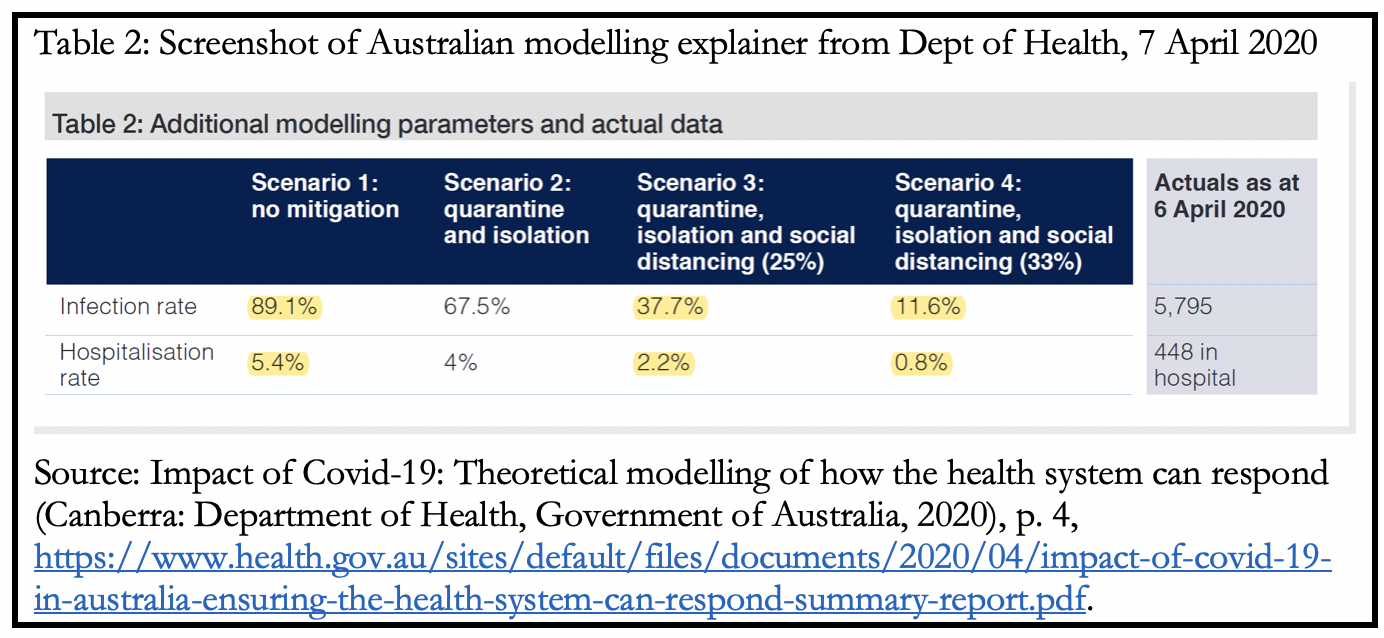
They might want to redo their maths. The modelling shows that under an unmitigated worst case scenario, 89% of the Australian population could have been infected. In that scenario only 15% of those who needed intensive care would have been admitted.
All these assumptions, derived from the core assumption of the reproduction rate ‘R’ being 2.53% based on the initial Wuhan data, have proven to be speculative, unreliable and inflated. As it turned out Australia’s ‘R’ was below 1% already by the time that strict control measures were put in place in late March.
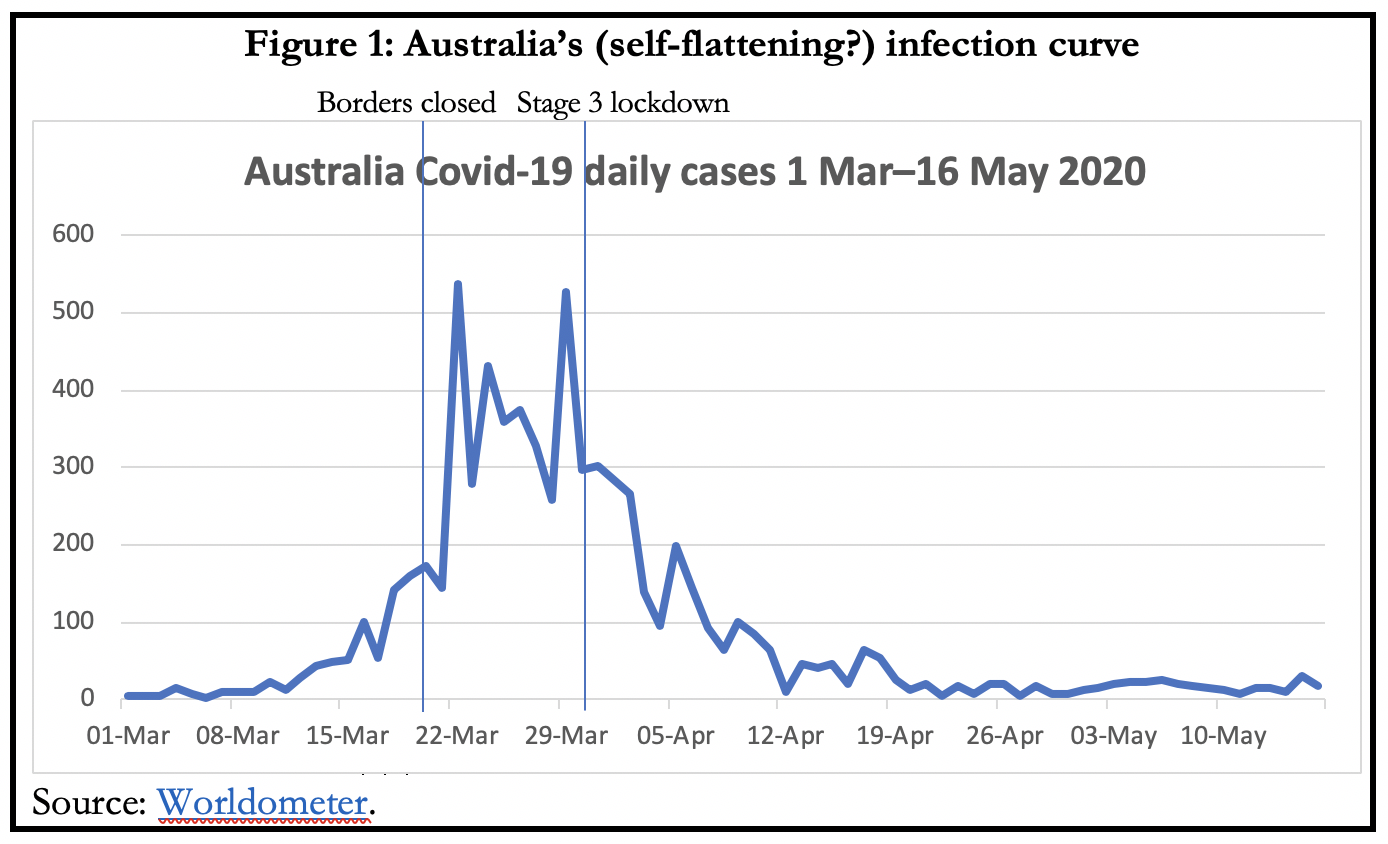
The highest tally of daily cases was 528 on 29 March; of ICU bedsoccupied was 96 on 6 April; and of Covid-19 patients in hospital was 448 on 6 April (Table 1). Stage 3 lockdown measures were imposed on 30 March. One week later the daily new cases had fallen below 100 and has stayed there, with the sole exception of 9 April when it was exactly 100. In interpreting the figure, it bears repeating that the virus has a 5-7 day incubation period.
Table 2 is a screenshot of the table from Appendix A of the modelling published by the Government on 7 April. It may be the only objective check we have on assessing the accuracy of the modelling.
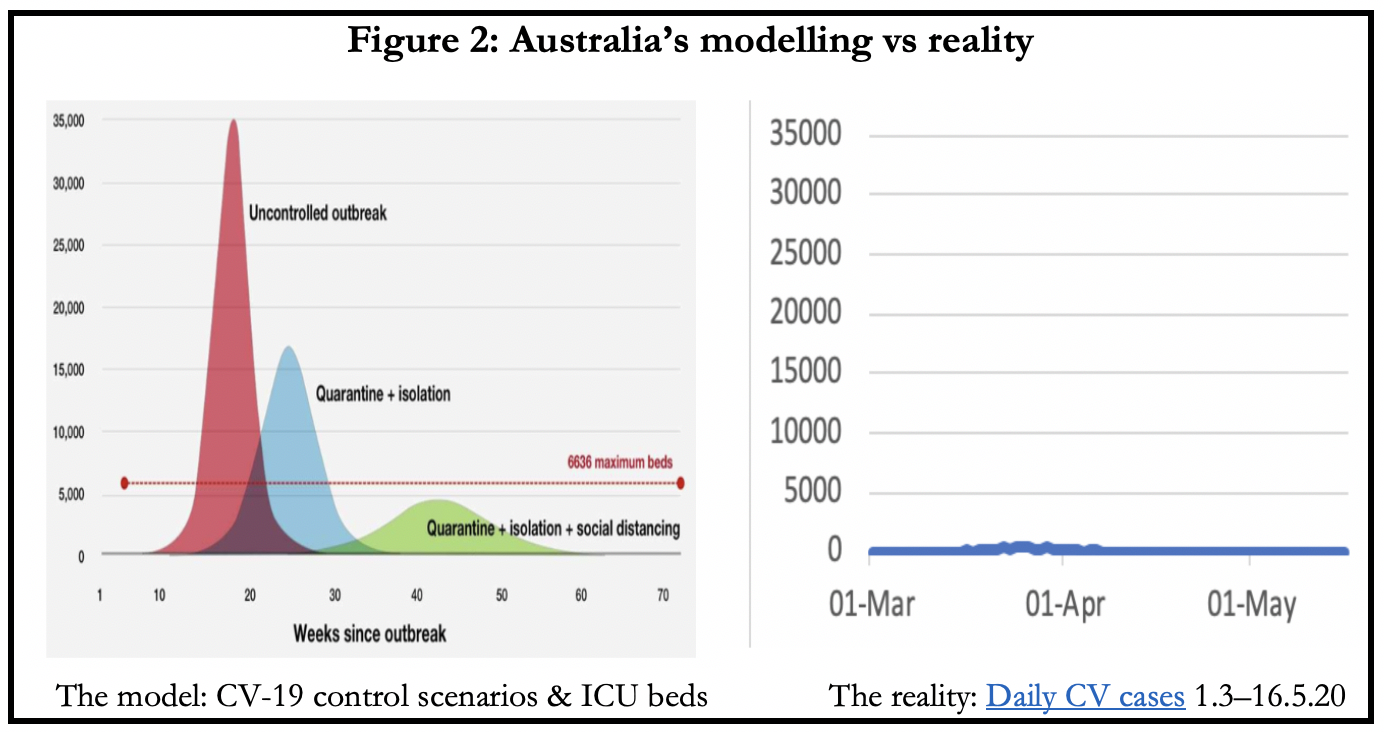
Under the model’s best case Scenario 4, with tight quarantine, isolation and social distancing measures in force that reduce the rate of transmission by a third, 2.9mn people would be infected, 200,000 would require hospitalisation and nearly 5,000 people would need to be in intensive care (Figure 2) during peak demand.
With infections just over 7,000 and ICU peak occupancy at 96, the predicted numbers are off by 400-fold and 50-fold respectively.
If their best case scenario is this defective, there’s little reason to believe the other, including worst case, estimates of the modelling. Thus there’s no accurate measure of how many lives were saved by this level of intrusive state control.
Taking advantage of the recommended lockdowns, a surprising number of political leaders seem to have relished the opportunity to indulge their inner despots, and some police officers took advantage early on to indulge their inner bully.
Queensland’s Chief Health Officer banned RAAF flyovers for ANZAC Day by four pilots despite admitting they would have been no risk to themselves or anyone else but would set a dangerous precedent, while permitting up to 80 to congregate for an Aboriginal Elder’s funeral. Her logic on school closures is similarly idiosyncratic. She accepts the evidence that schools are not a high risk environment for the spread of the virus but closing them helps to convince people how grave the situation is:
‘So sometimes it’s more than just the science and the health, it’s about the messaging’.
Almost all journalists seem to have lost their cynicism towards claims by the authorities and instead become addicted to pandemic panic porn.
The measures taken have been extreme, more even than has been done during a war and more than was attempted during earlier, deadlier flu epidemics. The authorities have told us who and how many are permitted into our homes, where we can and cannot go, how many people we can meet, where we can shop and for what, which services we can access and which not, even which medical and dental services we can still access. Who is going to call the Governments and the medical experts to account for the overreach?
A critical and sceptical profession would have put the government’s and modellers’ claims under the blowtorch and subjected them to withering criticism for the magnitude of errors by which their predictions have been off. Instead they have mostly joined the adoring multitudes in showering praise on the magnificence of the emperor’s new robe. Or, to change the metaphor, it is as if the Wicked Wizard of Wuhan (WWW) has cast an evil spell over the whole world and turned it into an enchanted forest with humans confined to limited spaces and the other creatures roaming freely, no longer terrorised by homo sapiens.
Looking to the future
Australia’s 50th biggest cause of annual deaths (110) is poisoning. At present, that is, Covid-19 does not make it to the top 50 causes of deaths. And for that we have inflicted such damage on people’s lives, livelihoods, education, freedoms, condemning them to house arrests en masse and robbing so many young of their future? If ever there was justification for a Royal Commission, this is it.
The point of the inquiry should not be to apportion blame for past mistakes. Rather, its primary term of reference should be to identify how we can prepare better for the next big one. In retrospect, we could have used the good fortune of the virus arriving in Australia in the latter part of summer, instead of in the middle of the flu season as in the northern hemisphere, to boost surge capacity at every bottleneck point to test, isolate, trace and treat cases.
One way or another, we will come out of this pandemic. But we can also be absolutely certain that it will not be the last pandemic to hit us. There will be others and next time we may not be fortunate in the timing (off flu season) or the geographical epicentre (North Atlantic). Also, the choice of Commissioners should reflect modern Australian demographics and the already evident reality that the best lessons to be learnt for successful responses are from Asia–Pacific countries. It’s both perplexing and irritating that, reflecting the composition of political and bureaucratic elites, Australia continues to look to Western countries to establish benchmarks.
Subject to change as the virus evolves, some things I would like to see begin with putting hard lockdown into the dustbin of history. And state border closures too, for that matter. Related to this, the government should provide the best available information and guidelines for individual and social health practices, but transfer the burden of risk back to individuals for assessing the dangers to themselves and the appropriate preventive measures to take and practices to adopt. A smarter approach is a more targeted approach, especially for an epidemic that is so strikingly age and gender stratified and in many jurisdictions has hit care facilities particularly badly.
We need surveillance mechanisms to identify and quarantine outbreak clusters backed by reliable contact-tracing methods. A team of scientists from Edinburgh and London has suggested a segmenting-and-shielding strategy that segments the elderly and frail while shielding their carers with adequate personal protective equipment. It is adapted from the ‘cocooning’ of infants by immunisation of close family members that is a pillar of infection prevention and control strategies.
The one thing in common that all the successful Asia-Pacific examples – Japan, Hong Kong, Taiwan, South Korea, Vietnam, Singapore – have is they learnt from the earlier avian flu and SARS examples. They made preparations in advance and their institutions and procedures were activated with exemplary swiftness and efficiency. We certainly require prepositioned and pre-approved equipment and procedures for screening passenger traffic at air and sea ports on short notice, stocks of protective, preventive and therapeutic equipment and supplies, a surge capacity to break through the bottlenecks when we need to scale up, and the right balance between national manufacturing capacity and diversified global supply lines.
How can we best begin organising for the next health epidemic by way of institutions? The National Cabinet has been a good innovation. But we also need the equivalent of the US Centers for Disease Control and Prevention (CDC) and the European Centre for Disease Prevention and Control (ECDC). Like the latter, I’d be in favour of a Trans-Tasman centre (TTCDC).
This story was originally published in one of Australia’s leading social policy journals Pearls & Irritations and is reproduced here with their kind permission.










 Courtesy of Buddy Tour All Access Pass