Sunday, 24 May 2020

By Australia’s Mehi River, A Sense of Place Magazine, 25 May, 2020.


The Craft and Art of Jupuul Mari

Mehi means girl in the gamilaraay dialect Miyaay. Moree is Mari and Mari means man. That is just the way whitefellas take our language and put it in their phonetic context.

Because our language is not written, it is only spoken. They misconstrue our meaning of words by listening to it in their own phonetic way. And they end up with all the meaning of the word taken out.

I am a Mari of the Gamilaraay Nation. Mari, Hippi, Cubby, Combo, Muutha, Hippitha, Cubbitha, Buutha.

First and foremost, if you’re not one of these you’re not Gamilaraay.

I grew up in moree on the black soil plains. My family have always lived on the banks of the Miyay River. They were here when white man arrived in this part of the continent and we are still here to this day. This is our duuwarri, dreamtime waterhole, this is cubbutha country, my spiritual home .

Some people are destined never to find a home.

Others are born there.

In a rush to the future, the past is forgotten.


A world view
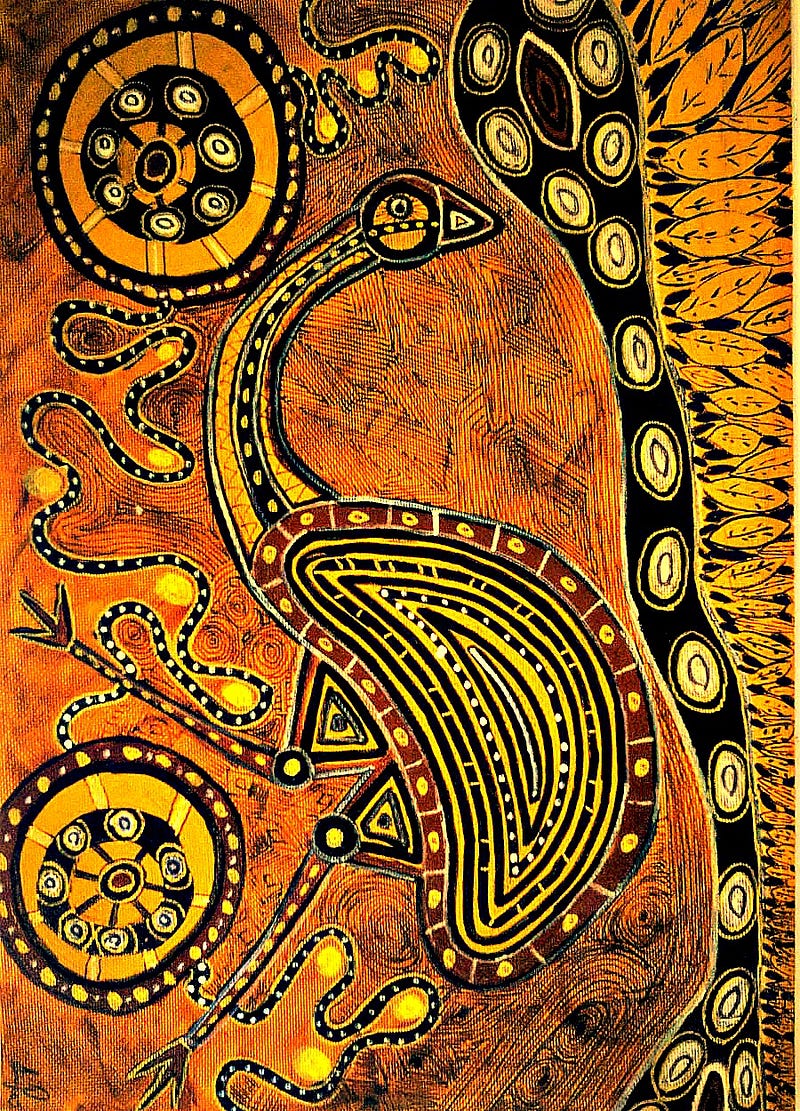
The rich black soils of the Moree Plains either side of the Mehi River stretch into agricultural industry, and out lying villages .

Local born man Steven Porter likes to use the traditional name Jupuul Mari (always a Gamilaraay man ).

These are his words:

When I was young there were a lot of old people in the town. Now they’re a lot of young people, and they are lost, because they don’t know where they came from.

We are sitting here uninvited. A lot of them have no respect. A lot of them are living on country and have no connection to their own country.

There are a lot of people in Moree from other places.

Where is their history in this place?

Impersonation, that’s what we’re doing, we’re impersonating a Western culture, a Western society that’s been inflicted upon us. Always jumping through the hoops and ticking boxes just to clarify to the white man that we are segregated.

We don’t want to be a part of your constitution, your laws, your system. It’s failed us since you invaded our country.

Flat open flood plains.

The secret of the scarred trees is that their a guide to what frequencies you have to hit to resonate the vibration that connects the conscious life with the spiritual.

The designs on the trees are actually patterns just like when you put a bowl of water on a speaker and you do high frequencies. A unique design comes from the bowl of water. Those designs are on the trees so people can hit those frequencies with chants and stomping on the ground, hitting clap sticks.

That give this melodic vibration that connects us to our creators. All indigenous cultures right across the the Earth all believe that we’re all connected through vibration.


Commonsense
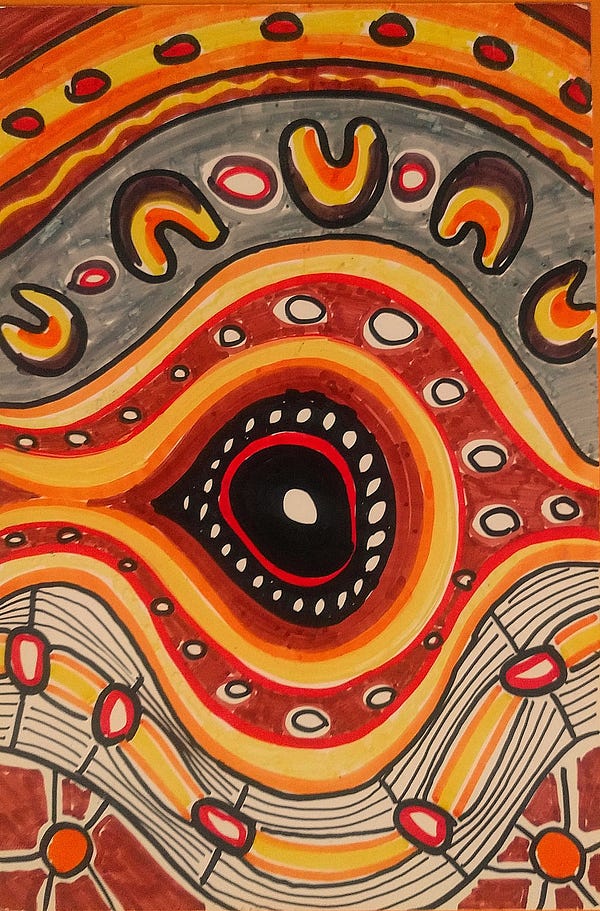
I’m honestly with the land so that we can send our message straight up from this to the Spirit in the Sky.

And all this is common sense for indigenous people right across the planet. Work on commonsense. None of them exerted themselves to get anything.

They want the easiest way in the simplest way to go and do it.

You’ll never see and indigenous people standing around with a fishing rod trying to catch a fish because they don’t fish for sport. We go the simplest and easiest way to get that sustenance but we were uncivilized. Because we were lived off the land we were savages.

I do my culture through my heart through my song and through my dance. I used to speak I used to teach language but I don’t teach you anymore because you don’t get very language doesn’t get the respect that it deserves people think you’re talking s***.

Who says your Western civilisation is the right way of living, the greedy way? It’s a wanting way, it’s not a needing way. Everything we did was for the betterment of the clan. No one was greedy. You are nothing but the land that you’re on. Talk about religion talk about Jesus talk about Muhammad talk about Allah they got no premise here on this continent.

They come over on a boat or on a plane or whatever else. We had our religion and culture system and more but white men couldn’t see that because we had no clothes. We weren’t nomadic people. We were connected to one part of the country.

You got speared in the leg if you crossed another person’s boundary without permission. So how dare they say that we were nomadic people. We all had planned boundaries like a house. Someone else’s boundary was just like break and enter today.

We don’t live under a flag. We lived under the sun and the moon and stars. They were our guidance throughout the night, and to tell us what to do the next day.

Night was story time. White people go stay up eight hours of the day at work, go home and sleep eight hours of the night. That was not in the black fellah’s way of life. We got up before the sun got up. We were out searching for food, checking our traps, setting new traps.

Then we went home, back to our camp, whatever part of the country that was.

We can take our traditional way of living and put it in a contemporary context so that we can carry that on today to help our nation thrive because we got people living on other people’s boundaries

Waterhole. Songline.

It’s just respect and no one is singing, no one is speaking the language of their land.

We are always conforming to mainstream society. Why?

Written and compiled by John Stapleton, editor of A Sense of Place Magazine. A collection of his journalism is being constructed here.

TODAY’S FEATURED BOOKS:

Saturday, 23 May 2020

Marvellous Mirvac: Australia’s $8 billion Property Developer Rorts JobKeeper Scheme, As Editor, A Sense of Place Magazine, 24 May, 2020.

 Marvellous Mirvac: Australia’s $8 billion Property Developer Rorts JobKeeper Scheme

By Michael West

This story was originally published on Australia’s leading investigative reporting news site Michael West Media. As the author has written of this story: “Busting the $8 billion property juggernaut Mirvac for rorting JobKeeper this week reminds us of precisely why we are here, our raison ‘d’etre if you like. Our stories were followed up in the mainstream media, politicians touched base, there was a strong reaction across social media. And the Tax Office responded. They are on the case. JobKeeper is being rorted from pillar to post.”

Mirvac, an $8 billion property juggernaut, is claiming the JobKeeker subsidy. Michael West reports on large corporations rorting taxpayers by pocketing their employees’ PAYG tax while avoiding their obligation to pay entitlements to workers they have sacked.

While regaling shareholders with big-ticket commercial property spending proposals, Mirvac has concocted a devious plan to usurp the JobKeeper scheme. Not only does Mirvac pay zero income tax, thanks to its trust structure, it also profits from government contracts and, now, has even availed itself of the JobKeeper subsidy as well. It’s the triple-decker taxpayer sandwich.

This, despite the JobKeeper rules which prohibit companies with more than one billion in revenue claiming the payments unless their revenues have fallen by 50 per cent.

Detailed questions were put to Mirvac chief executive Susan Lloyd-Hurwitz, who is yet to respond, however a statement from a company spokesperson said:

“We have applied for JobKeeper assistance for some of our employees across the Mirvac Group where we have experienced a significant decline in our normal operations”.

As Mirvac records revenues of around $2 billion a year, it should not be eligible for JobKeeper. Moreover, it has not informed the ASX that its revenues are down by more than 30%.

It appears therefore that Mirvac is being cute. Large property groups have typically established dozens of Special Purpose Vehicles (SPVs) to house their various businesses and game the GST regime.

Presumably, although part of a larger group, Mirvac is claiming JobKeeper based on the performance of some of these SPVs, probably where they can claim a 30% fall in income based on specific GST records within certain timeframes.

One former Mirvac manager, who was fired by Mirvac in April, told Michael West Media that, along with another colleague who was also fired, both were asked to fill out JobKeeper application forms.

“Mirvac chose to fire contracted employees across the entire business on April 21st 2020 “due to COVID”. The decision had nothing to do with the need of the specific roles as all different contractors were terminated.

“Mirvac exploited this COVID-19 crisis as a way to fire all staff employed on contracts. Considering that retail centres were open as an essential service our roles my role was certainly not genuinely redundant.

“I would think any business cannot use the pandemic as a guise to get rid of employees that they would otherwise be unable to dismiss under the laws of unfair dismissal.

“I was asked to work out the rest of the week and so still had access to my emails and phone. I received a termination letter … and then, later that week, received a JobKeeper nomination form from Mirvac HR. I cannot imagine why they would need me to fill out a JobKeeper nomination form if I am not keeping my job. I also received a follow-up phone call from one of Mirvac’s HR team on my personal phone number asking me to fill this out.

“What it did show was that Mirvac was clearly in the process of applying for JobeKeeper payments and should have incorporated that scheme to protect all staff.”

Mirvac’s chief executive declined to respond to specific questions regarding the amount of JobSeeker claims it had made or whether the board of the company was aware that it had been claiming the allowance.

According to the Government’s JobKeeper rules, a big business with more than $1 billion has to show a fall in turnover of more than 50% to be eligible to claim JobKeeper:

“Your business has faced either a:
30% fall in turnover (for an aggregated turnover of $1 billion or less)
50% fall in turnover (for an aggregated turnover of more than $1 billion),

Aggregated turnover tests for entities likely to exceed $1 billion:
Large businesses must show a shortfall percentage of 50% or more.

For the purposes of determining if the 50% shortfall percentage applies, a large business is an entity that:

had an aggregated turnover of more than $1 billion in the previous income year to the income year in which the turnover test period occurs, or
is likely to have an aggregated turnover of more than $1 billion in the income year during which the turnover test period occurs.

————–

Questions to Mirvac Chief Executive Susan Lloyd-Hurwitz

1. On what grounds is Mirvac applying for the JobKeeper subsidy? It is a billion-dollar company whose revenues have presumably not fallen 30% (the eligibility criteria)?

2. What eligibility criteria is Mirvac invoking to claim JobKeeper?

3. How many employees and ex-employees has Mirvac claimed for?

4. Could you please respond to this claim by somebody who used to work for Mirvac in March: “Mirvac chose to fire contracted employees across the entire business on April 21st 2020 “due to COVID”. The decision had nothing to do with the need of the specific roles as all different contractors were terminated.

Mirvac exploited this COVID-19 crisis as a way to fire all staff employed on contracts. Considering that retail centres were open as an essential service our roles my role was certainly not genuinely redundant.”

5. Does Mirvac retain the tax of PAYG employees who are now on JobKeeper?

6. Do you agree this amounts to a taxpayer subsidy which also allows Mirvac to avoid having to pay entitlements to workers it has let go?

7. Has the board of Mirvac been privy to your JobKeeper activities and have they been discussed at board level?

8. Has Mirvac taken legal advice in relation to its JobKeeper claims? Please detail.

Statement from Mirvac:

We have been impacted right across the breadth of our business, which is why we withdrew market guidance in March. We still have some way to go before we understand the full extent of the impact.

We moved quickly to implement a number of key measures in response to COVID-19, including

– reducing discretionary spend and deferring capital expenditure;

– a voluntary 20 per cent reduction in remuneration for the ELT and the Board, from 1 April to 30 June, to preserve cash and jobs; and

– a voluntary reduction in working hours for most employees, from 1 May to 30 June, to share the impact across the business.

We have applied for JobKeeper assistance for some of our employees across the Mirvac Group where we have experienced a significant decline in our normal operations.

ABOUT THE AUTHOR

Michael West

Michael West

Michael West established michaelwest.com.au to focus on journalism of high public interest, particularly the rising power of corporations over democracy. Formerly a journalist and editor at Fairfax newspapers and a columnist at News Corp, West was appointed Adjunct Associate Professor at the University of Sydney’s School of Social and Political Sciences. You can follow Michael on Twitter @MichaelWestBiz.

This image has an empty alt attribute; its file name is MICHAEL-WEST-LOGO-1024x157.jpeg
This image has an empty alt attribute; its file name is INDEPENDENT-NEWS-SITES-LOGO-1024x234.jpeg

TODAY’S FEATURED BOOKS:


Worldwide mass Surveillance by Germany’s Intelligence Service declared Unconstitutional, As Editor, A Sense of Place Magazine, 24 May, 2020.

 Worldwide mass Surveillance by Germany’s Intelligence Service declared Unconstitutional

Reporters Without Borders on Landmark Ruling on Press Freedom

In a much-anticipated verdict Germany’s Federal Constitutional Court has put an end to the groundless mass surveillance of global internet traffic by Germany’s foreign intelligence service, the Bundesnachrichtendienst (BND). The ruling, the most far-reaching in this field in the past 20 years, sends an important signal for the protection of press freedom in the digital age.

Читать на русском / Read in Russian

The court ruled that the BND law disregards both the freedom of the press guaranteed in article 5 and the freedom of telecommunications guaranteed in Article 10 of the Basic Law as it does not recognise that foreign surveillance must be conducted in conformity with the Basic Law. When revising the BND law, the legislature will have to take into account that foreign surveillance without cause is only possible in very few cases. Vulnerable groups of persons such as journalists must be granted special protection. Tighter criteria must also apply to the targeted surveillance of individuals. Furthermore, international surveillance must be controlled much more effectively by independent bodies with their own budgetary sovereignty. The ruling thus sets new standards in international human rights protection and for freedom of the press.

The Federal Constitutional Court has once again underlined the importance of press freedom,  said Christian Mihr, Executive Director of RSF Germany. We are delighted that Karlsruhe is putting a stop to the escalating surveillance practices of the Federal Intelligence Service abroad”, Mihr added.

Six international journalists, including renowned investigative reporters Khadija Ismajilova and Blaz Zgaga, had filed the constitutional complaint against the current BND law in cooperation with Reporters Without Borders (RSF), the civil rights NGO Gesellschaft für Freiheitsrechte, and four German media organisations.

The German Act on Signal Intelligence of Foreigners Abroad governing the practices of the BND legalized pre-existing practices of international mass surveillance uncovered by Edward Snowden in 2013. Journalists and civil society organisations were alarmed at its potentially chilling impact on whistle-blowing and investigative journalism at a time when most communication takes place online.

The plaintiffs argued that Article 1 of Germany’s Basic Law obliges the government to respect basic rights – irrespective of whether it is acting within Germany or abroad. Citizens of foreign states also have a right to privacy, the plaintiffs asserted, meaning that the BND may not intercept the communications and internet traffic of foreigners outside Germany without restrictions, as the BND law currently allows it to do. The Federal Constitutional Court has now unequivocally affirmed that this applies regarding Article 10 of the Basic Law guaranteeing the privacy of online communications.

It was precisely the commitment to fundamental rights, rejected by the BND, which motivated the foreign journalists to lodge their constitutional complaint. The mere possibility of permanent surveillance hinders their work because they are unable to build up trusting relationships with their sources. They now hope that the ruling of the Federal Constitutional Court will set standards for the activities of other states’ intelligence services as well.

Additional Background:

More than seven years after Edward Snowden exposed a global system of mass intelligence surveillance, the Federal Constitutional Court has ruled on the legality of Germany’s participation in these activities in the highest court. In the wake of the NSA scandal, a parliamentary investigative committee had brought to light the deep links between the US intelligence service and Germany’s BND, whereupon the then ruling coalition government passed a new BND law. However, instead of setting clear limits for the foreign intelligence service, the German government simply legalized the latter’s practically unlimited foreign surveillance – despite massive protests from civil society.

RSF and the Society for Civil Liberties (GFF) then coordinated an alliance of internationally renowned journalists and media organizations. Together they filed a constitutional complaint against the BND law at the end of 2017. Among other things, the plaintiffs feared that the protection of sources was being undermined: If secret services were able to store and evaluate every communication, contact persons all over the world would gradually lose confidence in the media – and in the worst case no longer turn to the press with information on sensitive issues. Through this back door, the BND was also undermining German “editorial secrecy” or source protection, for example when intercepting the communications of foreign partner media of German media outlets collaborating on major international research projects such as the Panama Papers.

TODAY’S FEATURED BOOKS:

Wednesday, 20 May 2020

NSW has approved Snowy Mountains Hydro 2.0. Six Reasons why that’s a Bad Move, As Editor, A Sense of Place Magazine, 21 May, 2020.

 NSW has approved Snowy Mountains Hydro 2.0. Six Reasons why that’s a Bad Move

By Bruce Mountain, Victoria University and Mark Lintermans, University of Canberra

The controversial Snowy 2.0 project has mounted a major hurdle after the New South Wales government announced approval for its main works.

The pumped hydro venture in southern NSW will pump water uphill into dams and release it when electricity demand is high. The federal government says it will act as a giant battery, backing up intermittent energy from by wind and solar.

We and others have criticised the project on several grounds. Here are six reasons we think Snowy 2.0 should be shelved.

1. It’s really expensive

The federal government announced the Snowy 2.0 project without a market assessment, cost-benefit analysis or indeed even a feasibility study.

When former Prime Minister Malcolm Turnbull unveiled the Snowy expansion in March 2017, he said it would cost A$2 billion and be commissioned by 2021. This was revised upwards several times and in April last year, Snowy Hydro awarded a A$5.1 billion contract for partial construction.

Snowy Hydro has not costed the transmission upgrades on which the project depends. TransGrid, owner of the grid in NSW, has identified options including extensions to Sydney with indicative costs up to A$1.9 billion. Massive extensions south, to Melbourne, will also be required but this has not been costed.

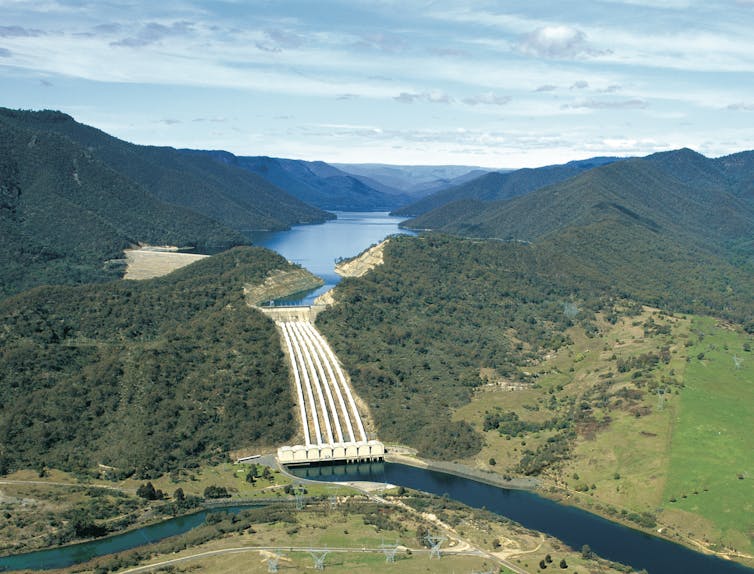
The Tumut 3 scheme, with which Snowy 2.0 will share a dam. Snowy Hydro Ltd

2. It will increase greenhouse gas emissions

Both Snowy Hydro Ltd and its owner, the federal government, say the project will help expand renewable electricity generation. But it won’t work that way. For at least the next couple of decades, analysis suggests Snowy 2.0 will store coal-fired electricity, not renewable electricity.

Snowy Hydro says it will pump the water when a lot of wind and solar energy is being produced (and therefore when wholesale electricity prices are low).


Read more: Snowy 2.0 is a wolf in sheep’s clothing – it will push carbon emissions up, not down


But wind and solar farms produce electricity whenever the resource is available. This will happen irrespective of whether Snowy 2.0 is producing or consuming energy.

When Snowy 2.0 pumps water uphill to its upper reservoir, it adds to demand on the electricity system. For the next couple of decades at least, coal-fired electricity generators – the next cheapest form of electricity after renewables – will provide Snowy 2.0’s power. Snowy Hydro has denied these claims.

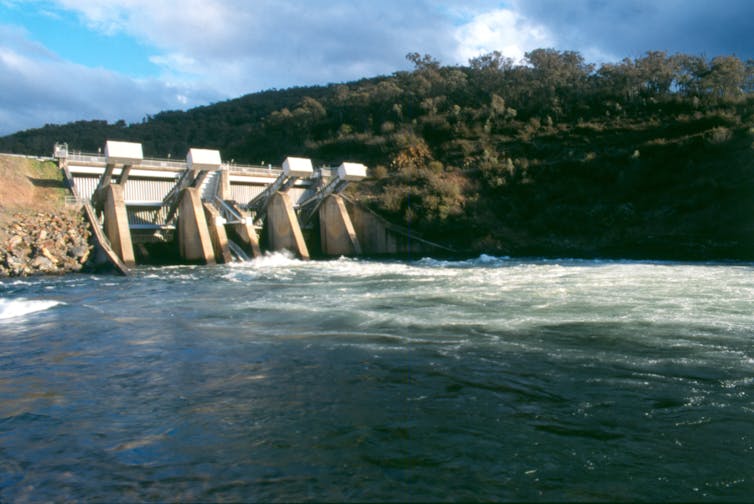
Khancoban Dam, part of the soon-to-be expanded Snowy Hydro scheme. Snowy Hydro Ltd

3. It will deliver a fraction of the energy benefits promised

Snowy 2.0 is supposed to store renewable energy for when it is needed. Snowy Hydro says the project could generate electricity at its full 2,000 megawatt capacity for 175 hours – or about a week.

But the maximum additional pumped hydro capacity Snowy 2.0 can create, in theory, is less than half this. The reasons are technical, and you can read more here.

It comes down to a) the amount of time and electricity required to replenish the dam at the top of the system, and b) the fact that for Snowy 2.0 to operate at full capacity, dams used by the existing hydro project will have to be emptied. This will result in “lost” water and by extension, lost electricity production.


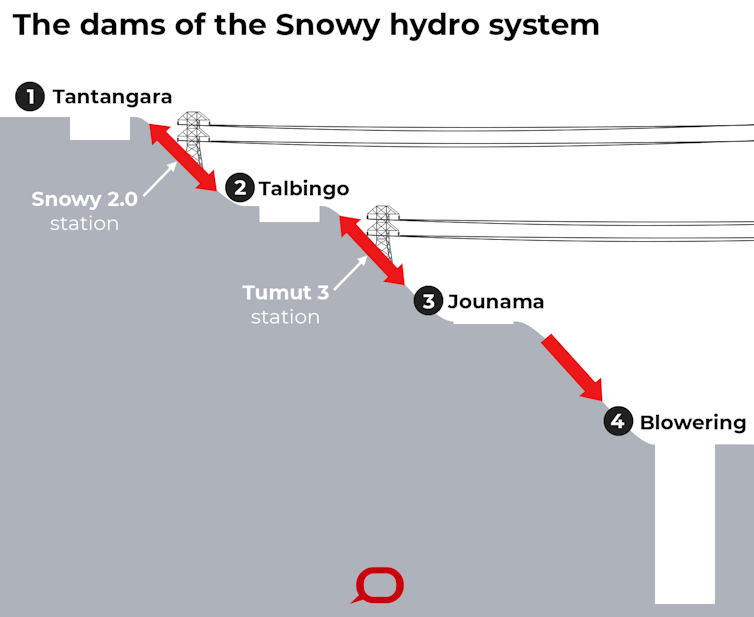
The Conversation, CC BY-ND

4. Native fish may be pushed to extinction

Snowy 2.0 involves building a giant tunnel to connect two water storages – the Tantangara and Talbingo reservoirs. By extension, the project will also connect the rivers and creeks connected to these reservoirs.

A small, critically endangered native fish, the stocky galaxias, lives in a creek upstream of Tantangara. This is the last known population of the species.

The stocky galaxias. Hugh Allan

An invasive native fish, the climbing galaxias, lives in the Talbingo reservoir. Water pumped from Talbingo will likely transfer this fish to Tantangara.

From here, the climbing galaxias’ capacity to climb wet vertical surfaces would enable it to reach upstream creeks and compete for food with, and prey on, stocky galaxias – probably pushing it into extinction.

Snowy 2.0 is also likely to spread two other problematic species – redfin perch and eastern gambusia – through the headwaters of the Murrumbidgee, Snowy and Murray rivers.


Read more: Snowy 2.0 threatens to pollute our rivers and wipe out native fish


5. It’s a pollution risk

Snowy Hydro says its environmental impact statement addresses fish transfer impacts, and potentially serious water quality issues.

Four million tonnes of rock excavated to build Snowy 2.0 would be dumped into the two reservoirs. The rock will contain potential acid-forming minerals and other harmful substances, which threaten to pollute water storages and rivers downstream.

When the first stage of the Snowy Hydro project was built, comparable rocks were dumped in the Tooma River catchment. Research in 2006 suggested the dump was associated with eradication of almost all fish from the Tooma River downstream after rainfall.

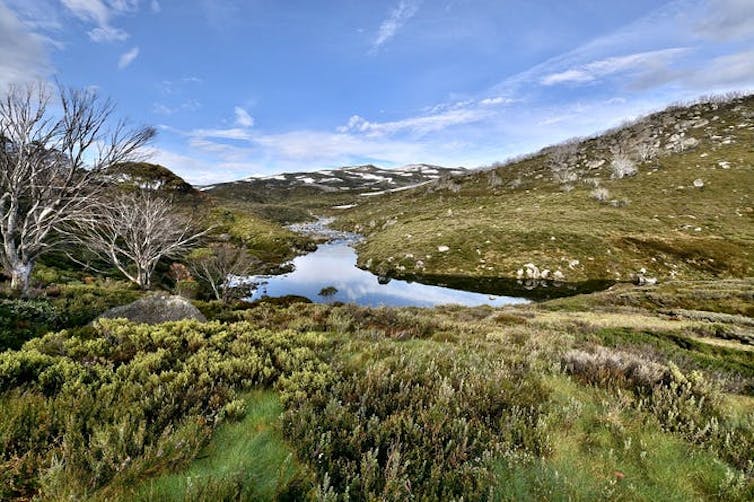
Snowy 2.0 threatens to pollute pristine Snowy Mountains rivers. Schopier/Wikimedia

6. Other options were not explored

Many competing alternatives can provide storage far more flexibly for a fraction of Snowy 2.0’s price tag. These alternatives would also have far fewer environmental impacts or development risks, in most cases none of the transmission costs and all could be built much more quickly.

Expert analysis in 2017 identified 22,000 potential pumped hydro energy storage sites across Australia.

Other alternatives include chemical batteries, encouraging demand to follow supply, gas or diesel generators, and re-orienting more solar capacity to capture the sun from the east or west, not just mainly the north.

Where to now?

The federal government, which owns Snowy Hydro, is yet to approve the main works.

Given the many objections to the project and how much has changed since it was proposed, we strongly believe it should be put on hold, and scrutinised by independent experts. There’s too much at stake to get this wrong.


Read more: Five gifs that explain how pumped hydro actually works


Bruce Mountain, Director, Victoria Energy Policy Centre, Victoria University and Mark Lintermans, Associate professor, University of Canberra

This article is republished from The Conversation under a Creative Commons license. Read the original article.


RELEASED THIS WEEK TODAY’S FEATURED BOOK: