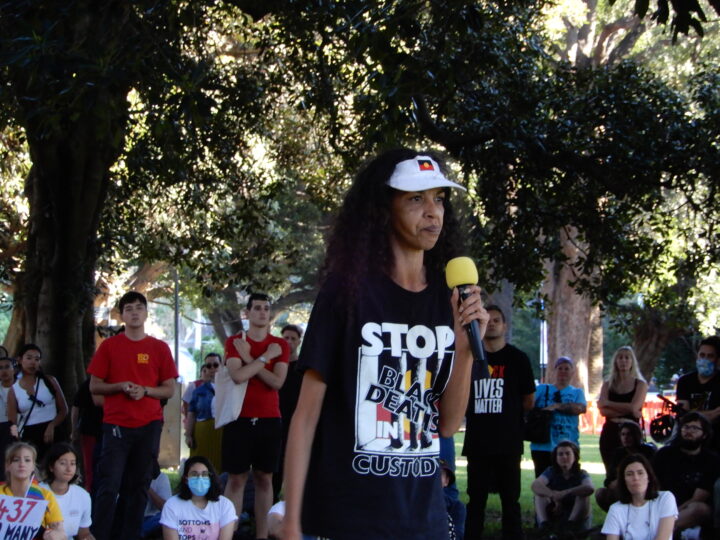
Tuesday, 14 September 2021

The Political Flouting of Pandemic Restrictions Is Anti-Democratic, As Editor, A Sense of Place Magazine, 15 September, 2021.

 The Political Flouting of Pandemic Restrictions Is Anti-Democratic

By Paul Gregoire: Sydney Criminal Lawyers Blog.

In case you haven’t noticed, there are fast growing divisions within the community between those in favour of the use of pandemic border closures and lockdowns and those who oppose their imposition.

Yet, the prime minister having breached these restrictions last weekend is an affront to us all.

Right now, the border between NSW and the ACT is closed. There are very few exceptions as to who can continue to cross it. And meanwhile, both the most populous state and the capital territory have long-term lockdowns in place, with their populations under stay-at-home orders.

These communities have been asked to endure infringements upon their regular freedoms to promote public health, which, as Sydney has shown in its eleventh week in lockdown, most residents are willing to abide by in order to curb the spread of the deadly COVID-19 virus.

And tensions are high. Sydneysiders haven’t been able to see family members in neighbouring local government areas for months. And some have been refused permission to cross either domestic or international borders to visit sick or dying loved ones.

The army has even been deployed in a discriminatory manner to monitor restriction compliance in Sydney’s southwest and western suburbs.

So, when Scott Morrison sought a special exemption to fly from Canberra to Sydney to visit his family over the Father’s Day weekend, it showed a deep lack of respect for all those Australians who have undergone restrictions, and it also led credence to those who have chosen to break the rules.

Leading by example

As the BBC reported, ACT health authorities gave the PM an exemption to travel to NSW on a RAAF jet, as he was found to be an essential worker. However, while essential workers in Sydney and Canberra are permitted to travel to work and back, they’re not allowed to go on quick jaunts.

On Father’s Day, Morrison posted a message on Instagram with a photo of himself standing with his family from a few months ago, as he waxed lyrical about the importance of the “essential” commemorative day. Yet, he failed to let on that he’d skipped the capital and was with them.

The head of state then flew back to Canberra – $6,000 all up on the taxpayer purse – and didn’t have to undergo the 14 days of quarantine usually required when crossing closed borders, as he was granted an exception so he could attend a meeting of the war cabinet.

But the media caught wind of this. And the PM went on to tell Sky News on Tuesday that “he can understand people’s frustration, but there has been a lot of misinformation about this.” He then explained that he didn’t have to get an exemption to go to Sydney, but rather to return to Canberra.

But no matter which way he works it, the truth is, no one else was able to fly across borders simply to celebrate Father’s Day. In Sydney, people couldn’t even travel out of their LGAs to do so.

And a number of high-profile cases during the pandemic period have involved people not being able to cross borders for pending family deaths.

A privileged practice

Of course, the PM is not the only politician or personality to have been able to officially break COVID rules. There have been many such cases.

Known for her hard stance on border closures, Queensland premier Annastacia Palaszczuk took a trip to Tokyo in July to push for Brisbane to be granted the 2032 Olympic Games. And while this certainly wasn’t essential, perhaps it was a little more vital than going home for Father’s Day.

Palaszczuk was also served a heavy rebuke for allowing NRL players and their partners to disregard border closures and fly into Brisbane, to which she’s now officially apologised for.

Billionaire Andrew “Twiggy” Forrest revealed in January that he’d spent much of last year flying around the globe on official business for his company Fortescue Metals Group. The mining magnate did this while the nation’s borders were closed, as they continue to remain so.

This flouting of COVID laws is problematic as members of the public sitting at home frustrated with the restrictions being placed upon them – especially those who have lost their work – are certainly being shown that the flouting of the rules doesn’t really matter even with the virus circulating.

The tossing out the COVID rule book for frivolous matters also serves as punishment to those who are being restrained from crossing either domestic or international borders, when they have desperate family matters to see to, especially when it involves illness.

The instances of politicians disregarding restrictions – as well as the granting of this privilege to those they feel worthy of it – is also an indication of a deeper issue within this nation’s governance that strikes to the core of our democracy.

When We Needed Churchill – We Got ScoMo: The Best of 2020.

Eroding the rule of the people

As the Australian government tells it online, our nation is a democracy, which implies “rule by the people”. And as the country is a representative democracy, the citizenry elects politicians to make decisions on its behalf.

A key democratic principle is the rule of law: that “everyone is equal before the law and must follow the law”.

Indeed, democracy doesn’t mean politicians and their mates can flout the laws for their own benefit, as this tends towards autocratic rule and cronyism.

On climate, the distribution of public funds and decisions made in relation to ever-increasing laws that erode rights and enhance the surveillance state, the Morrison government has shown time and again that this country is not functioning as a true democracy. It just hasn’t officially said so.

And in true duplicitous style, the prime minister, for the first time, went on to thank the more than 38,000 Australian citizens who remain stuck overseas – since the international border closure was instigated in March 2020 – just a few days after the Father’s Day debacle.

“I know for Australians overseas it’s been a very frustrating time. It’s tough: living through a pandemic and being separated from your family,” the prime minister said during his recorded message.

Yet, he stopped short of offering these citizens abroad any of the same special exemptions that he and, somewhat closer to the point, that Twiggy Forrest have been enjoying over the pandemic period.


Political Dynamite: JobKeeper for billionaires a campaign wrecker for Morrison, Frydenberg, As Editor, A Sense of Place Magazine, 15 September, 2021.


Political Dynamite: JobKeeper for billionaires a campaign wrecker for Morrison, Frydenberg

By Michael West, founder of Michael West Media.

Big business doesn’t vote, small business does. That’s the dilemma for Scott Morrison and Josh Frydenberg as they try to keep JobKeeper secret heading into the election. Michael West reports. 

There is rising discontent in the Liberal Party’s small business base about the billions splashed on JobKeeper subsidies to large, profitable corporations.

No wonder. It is hardly comforting to know that the world’s richest man, French fashion magnate Bernard Arnault, is a beneficiary of Josh Frydenberg’s largesse. Perhaps Australian taxpayers may be afforded the privilege of adding to Bernard’s collection of Picassos or footing the fuel bill for his newest super-yacht (pictured in Monaco above) Symphony. 

The symphony of revelations that large profitable companies, elite schools, posh clubs, and even foreign multinationals such as Bernard’s LVMH group which owns Louis Vuitton, Christian Dior and Moët & Chandon have been gorging on JobKeeper, have just tossed an ugly big spanner in the works for the Coalition election campaign.

The debacle over the vaccine roll-out has rendered an early federal election unlikely. Amid exploding Covid infections in NSW, Morrison’s campaign team is now desperately pushing the narrative “end lockdowns, live with Covid” while demonising Labor state premiers for closed borders but, with every death, time is running out for an early election. Besides, what premier in their right mind would open their borders to NSW right now?

Jobkeeper
The Big Grift: How the Top End of Town rorted Jobkeeper

Snapback snapped

Then there is the economy. It all intersects, tactically. The snapback from recession may soon be crushed by the likelihood that Australia will lapse back into recession in the September quarter. The June quarter figures which emerged last week were buoyant, yet they only included a few days of Sydney lockdown at the end of June.

Meanwhile, even the Liberal-biased media is beginning to fracture, such is the rising furore over JobKeeper. Assuming Scott Morrison has up until May next year to go to the polls, it leaves him a small window to drag the economy out of the doldrums following the December quarter figures which emerge in March next year.

Assuming a best case scenario, that asset prices don’t pop and the economy recovers, the JobKeeper conundrum may be the key to the Coalition’s electoral fortunes. If they keep the register a secret, eschewing proper disclosure practices in the US, Europe, New Zealand and elsewhere, the revelations of corporate welfare will continue to eke out; resonating unfairness, profligacy, incompetence on a grand scale.

Holy Dooley, Catholic clubs make a killing from poker machines

Here’s one for today. Highly profitable pokies den DOOLEYS Lidcombe Catholic Club in Western Sydney, whose Patron is Archbishop Anthony Fisher, banked $3.15m in JobKeeper subsidies despite shedding 11% of its staff in the 2020 financial year. 

An investigation by Michael West Media into DOOLEYS’ financial statements showed losses per member from poker machines over a nine-year period were 38 times higher than the amount spent per member on “community services”. 

The pokies den averaged more than $50m a year over ten years in clear profits from their pokies players, alone, before grog and food.

They will keep coming. There was media magnate Lachlan Murdoch’s radio company Nova Entertainment which nabbed a $10m handout then recorded a 29% surge in profit. 

The Kings School, with its crest Fortiter et Fidelitur, bravely and faithfully grabbed its share. Brisbane Grammar whose motto nil sine labore picked up its free money with nil labore at all. Melbourne’s Wesley College, with its motto sapere aude, dared to bludge on the public with all the sapience it could muster. All already enjoy enormous public subsidies. None of them needed the money in the least.

Should St Josephs at leafy Hunters Hill change its school motto from in meliora contende (let us strive for better things) to Let Us Strive for More Money from the Peasants?

JobKeeper
“Everybody did it”: wealthy doctors lobbies ride JobKeeper gravy train

Nil sine labore, que?

What message does this orgy of unprincipled scrounging send to the children they teach at these schools? That it is okay to take whatever you can get as long as it’s technically legal, then hide it, even if you have to lie to predict a 30% fall in revenues to meet the JobKeeper “honour” threshold?

Doctors too are appalled at the gaming of the system. One contact telling us his Australian New Zealand College of Anaesthetists (ANZCA) was grilled at the annual meeting about helping itself to $3.5m, only to respond that it was okay because everybody was doing it. 

“It is small beer, but as far as I can see the specialist medical colleges all did nicely out of Jobkeeper. My college, ANZCA, $3.5M. I checked the annual financial reports of the physicians and surgeons: a little more. I asked a question at ANZCA’s AGM re whether now that the dust has settled we would pay the money back. The response was that we are doing what other similar organisations are doing.

“I see that the wealthiest schools got as much as $20m, so the medical colleges are certainly able to say “well, we really didn’t get much”. But if everything was on the public record, and momentum grew for those who didn’t need it to pay their money back, I think a lot of these smaller players would buckle in order to avoid public opprobrium.”

Pauline Hanson
High-End Heist: Josh sells Pauline the dummy, JobKeeper heat rises

The Big Four consultancy and audit firms have told us they didn’t get it. Surely though, they were the enablers, the first phone call which every large corporation made. Can we get this?

Nine’s 60 Minutes continued the rot for the Government last night, running a good investigation into the “biggest cash grab in history”. The significance of this was that Nine is Liberal aligned. It got JobKeeper itself, and its major advertisers such as Qantas and Gerry Harvey also supped high on the public teat.

Despite all that it had a crack. The most delicious bit was Liam Bartlett the reporter pushing Simon Birmingham on the matter, saying the architect of the scheme, Treasurer Josh Frydenberg, by hiding from the 60 Minutes cameras, had pushed him under a bus.

Indeed, “Birmo” was not even Finance Minister then, he was Minister for Education. Even Murdoch’s Herald Sun, albeit buried in the back of the newspaper, ran a story about Bernard Arnault and his Louis Vuitton getting its $6m. JobKeeper rorting is irresistible, political dynamite.

Gucci, JobKeeper
Gucci Handbag: Josh Frydenberg’s JobKeeper gifts to Gucci and Prada

What business needs

And it will not go away, which presents an agonising dilemma for the Coalition and its big donors and corporate patrons. Where is the business lobby, where is the Business Council of Australia on this disgrace? Invisible. Carping on about border closures and “what business needs”.

The government managed to put off the inevitable, buy some time last week, when it put Pauline Hanson up with a bogus transparency amendment, literally to disclose all the ASX companies which received it, literally all the companies which had already disclosed they had received it. The demands for disclosure, despite the duping of One Nation will not dissipate. The passage of legislation will depend on it. As key cross-bench senator Rex Patrick tweeted after the debacle:

“I’m done with ‘em. Scott Morrison gifting hard earned taxpayer money to his business mates & donors makes him the most shameless & unethical PM ever. And Josh Frydenberg’s JK prudential failure makes him the most incompetent treasurer ever. EPBC discussions over Susan Ley!”

In the end, the outcome on disclosure and therefore billions in grifted public money returned, will come down to the realisation that this, as Shadow Finance spokesman Andrew Leigh puts it, not Liberal Party money, it is taxpayers’ money. It will come down to the generation realisation that, yes while JobKeeper did keep a lot of worthy businesses alive during the pandemic, it was also rorted from pillar to post and those who now have the money of ordinary Australians need to disclose.

It will come down also, more fundamentally, to the plunging standards of political and business leadership in this country and real leaders will have to stand up and do what is right or be condemned by future generations, or worse drag future generations into the mires of an ethical wilderness where “they got it too” is the only standard which counts.

JobKeeper, BCA, AI Group
Unless they disclose who got it, JobKeeper will remain a giant festering stain on the reputation of big business in Australia. Michael West reports on business’s greatest shame.


Friday, 16 April 2021

Hunting With Eagles: In the Realm of the Mongolian Kasakhs, As Editor, A Sense of Place Magazine, 17 April, 2021.


Hunting With Eagles: In the Realm of the Mongolian Kasakhs

The Photography of Palani Mohan

Every year their numbers drift inexorably towards zero.

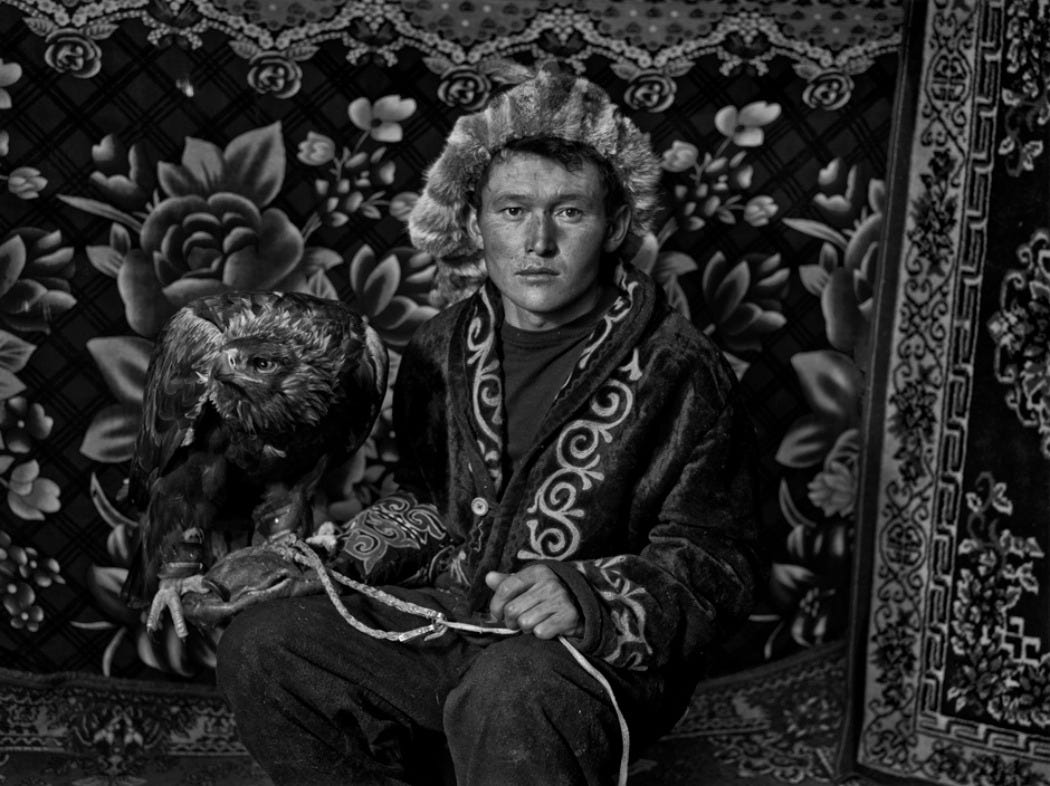
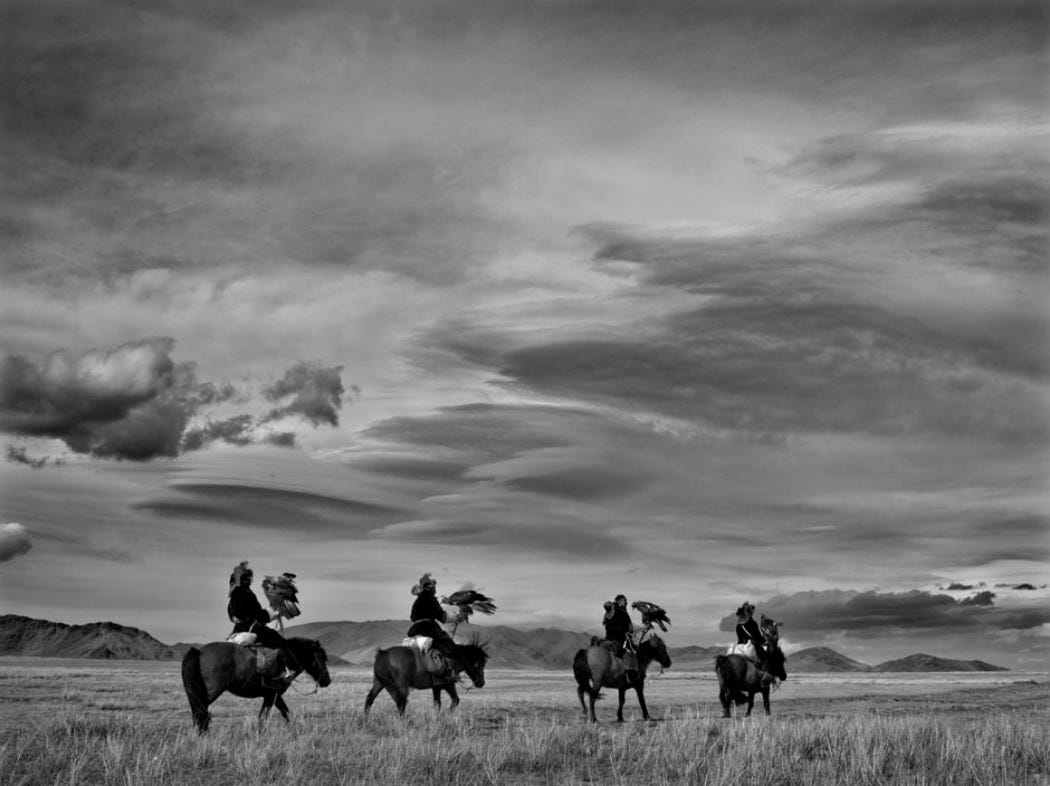
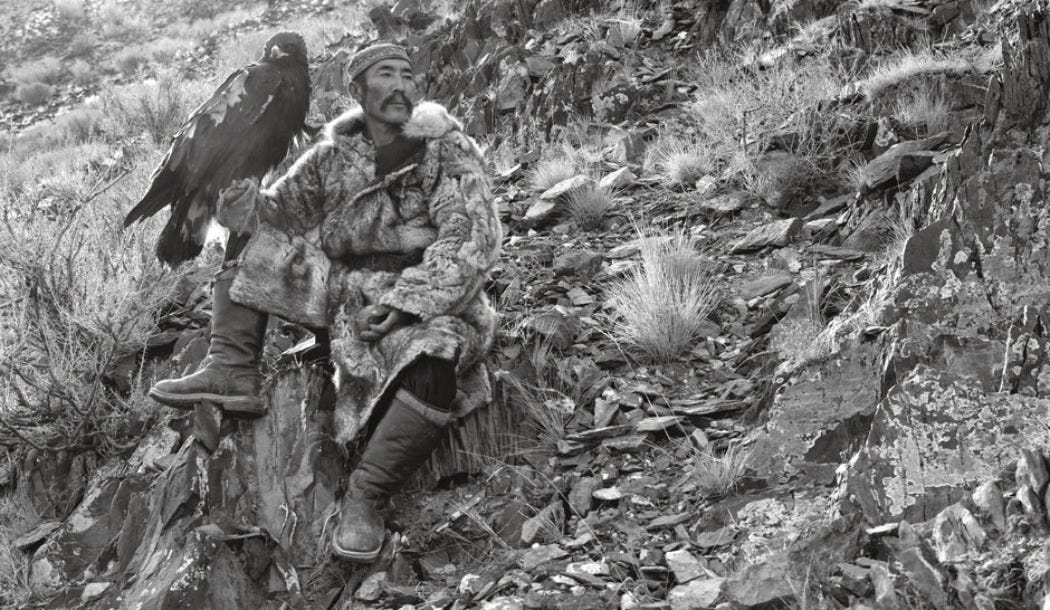
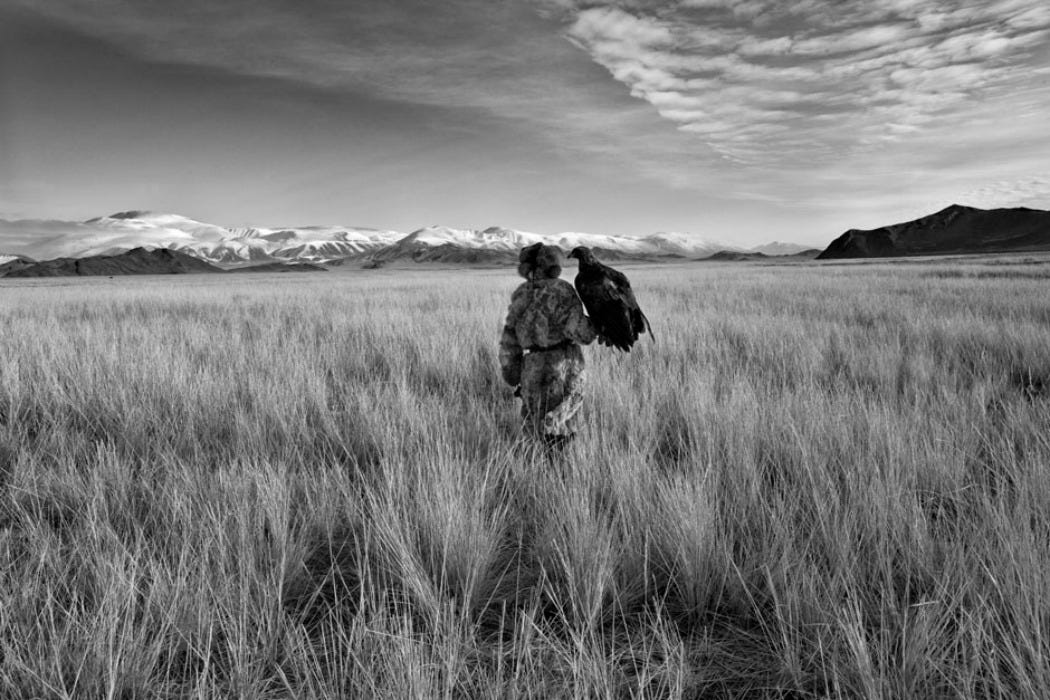
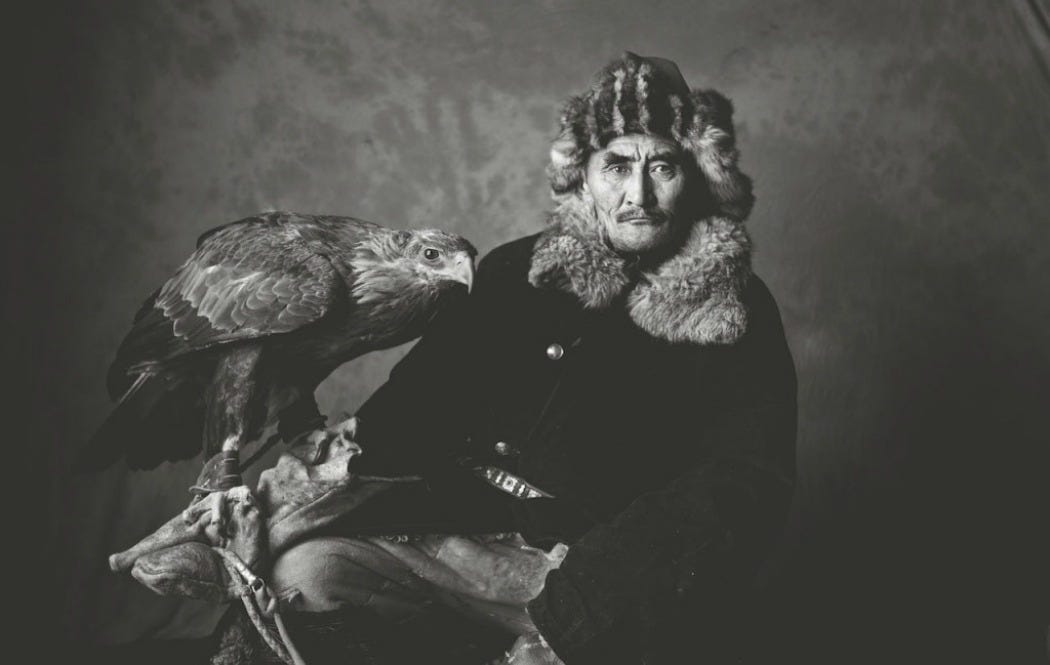
Deep in the wilds of far western Mongolia are the last remaining Kazakh eagle hunters. The burkitshi, as they are known in Kazakh, are proud men whose faces echo the harshness of the beautiful, barren landscape they call home.

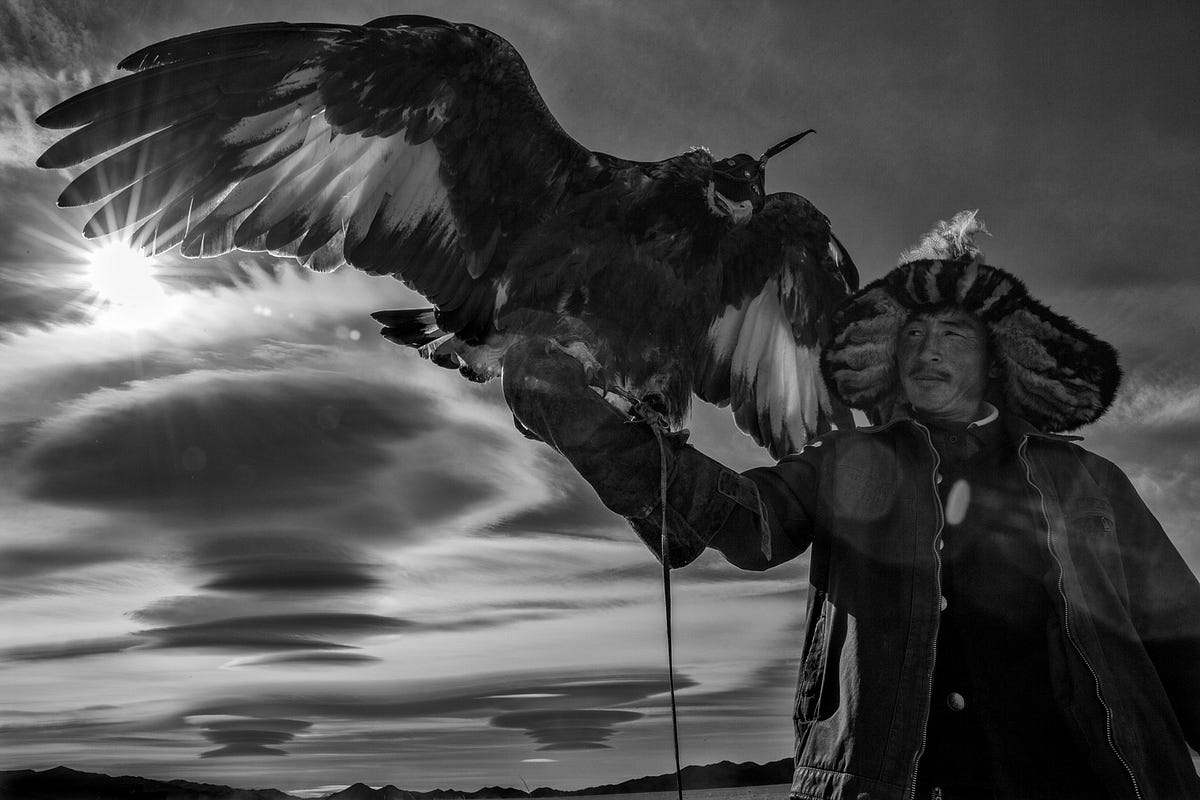
They have a remarkable bond with the golden eagle, which to them represents the wind, the open space, the isolation and the freedom found at the edge of the world.

Australian photographer Palani Mohan has spent years documenting the noble hunters, but says only 60 remain, and fears the ancient tradition could disappear within 20 years. Along with them perishes a unique way of life.

Young people are uninterested in the tradition and increasingly migrating to cities, like the polluted Mongolian capital of Ulan Bator.

Here are excerpts from the Hunting With Eagles: In the Realm of the Mongolian Kasakhs and samples of Palani’s magnificent photography.

During the long winters, the eagle hunters leave their homes and head into the mountains on horseback to hunt foxes — a tradition said to stretch back as far as 940 AD.

This way of life, which has lasted for centuries, is rapidly disappearing.

“There are about 60 of the true hunters left, and each winter claims a few more because winters are incredibly brutal. And they’re getting old, and every winter about two of them die,” Mohan says.

“It’s important not to forget about people like these eagle hunters on the edge of the world.”

It is not just the bitter cold threatening to wipe out the eagle hunters.

“I’ve spoken to a lot of teenagers, men and women, and they want to wear jeans and go into town and listen to music and earn money. The eagle hunting is a lonely, cold, old way of living and like all teenagers they want the new modern thing,” Mohan says.

“Ulaanbaatar, the capital, is a very long way away but that’s where a lot of people head. People are going to Russia or Kazakhstan.”

Mohan, who was born in India and grew up in Australia, cut his teeth as a cadet with The Sydney Morning Herald. It was then that he first saw a photograph of an eagle hunter.

“Where on earth was Mongolia, and how could men tame eagles? I was desperate to go, but for 25 years I did nothing about it.”

But finally Mohan set out to photograph every remaining Kazakh eagle hunter.

“At first it’s cold and there’s no-one there, and it’s very desolate. Eventually after many days of asking people you find one,” he says.

“One eagle hunter would take me to another eagle hunter, and so it goes. But sometimes you have to drive for a couple of days to find the eagle hunter.”

He thinks he has fulfilled his dream of “finding them all”, though admits “you can never be sure”.

Mohan found the solitude and space of Mongolia very affecting, but that was not the only challenge.

“I hate the cold, and I am mainly vegetarian, so I was all wrong for this job. It’s by far the hardest thing I’ve ever had to do physically, and professionally,” he says.

“It is -40 degrees, it’s Hell on Earth. My eyes were constantly watering, which in turn would freeze, and it’s very painful.

“And my camera gear would completely collapses. Batteries have a real issue with the cold. I used to go to sleep with the batteries taped to my armpits and other warm parts of my bodies, just to keep it warm.

“When I needed to shoot I would stick my hands down my shirt and rip out the battery, and it would have hopefully a couple of minutes before the battery completely drained.

This image has an empty alt attribute; its file name is 1*6M2yMDJxOgWpePCUfzLR0g.jpeg

“And its very difficult to work with six pairs of thermal stuff on, and big jackets on, so it’s hard work. It’s very difficult to operate gears and buttons and cameras and so on.”

But he says the pain was worth it if his photos help people remember “people like these eagle hunters on the edge of the world”.

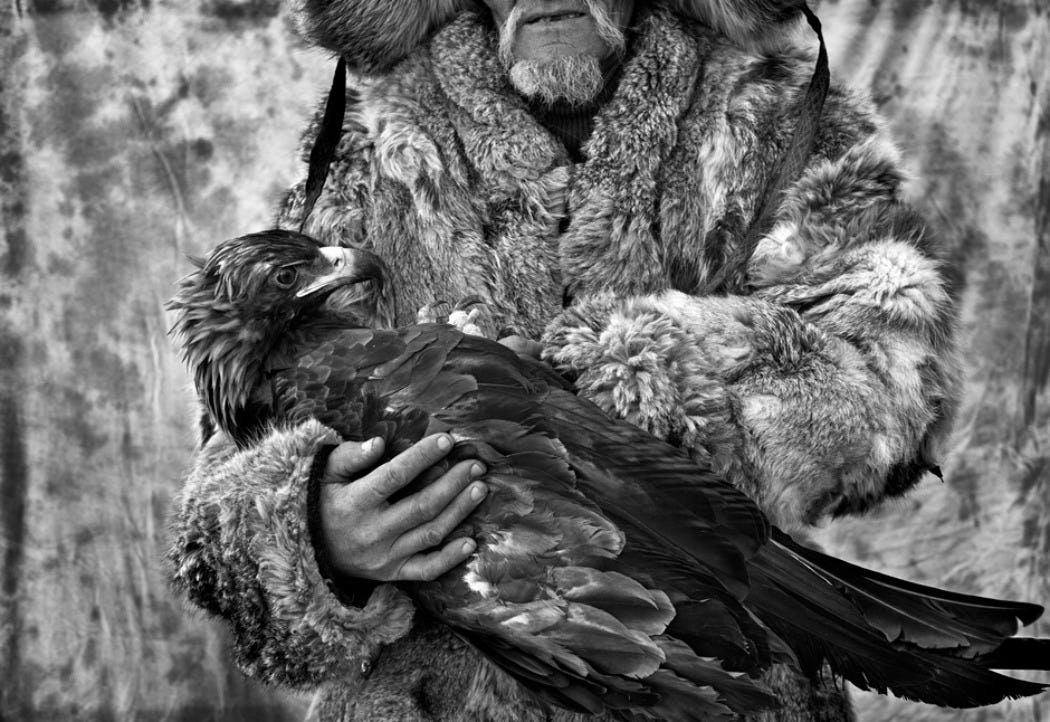
“It is the bond between hunter and eagle that fascinated me,” Mohan writes in the book. “All the men I’ve spoken to describe the eagle as part of the family, even as their own child. The hunters all had stories about how they loved all their birds even more than their wives. And there’s a Kazakh saying that if a hunter’s father dies on the day the snow starts to fall, the hunter won’t be at the funeral because he’ll be up in the hills with his eagle.”

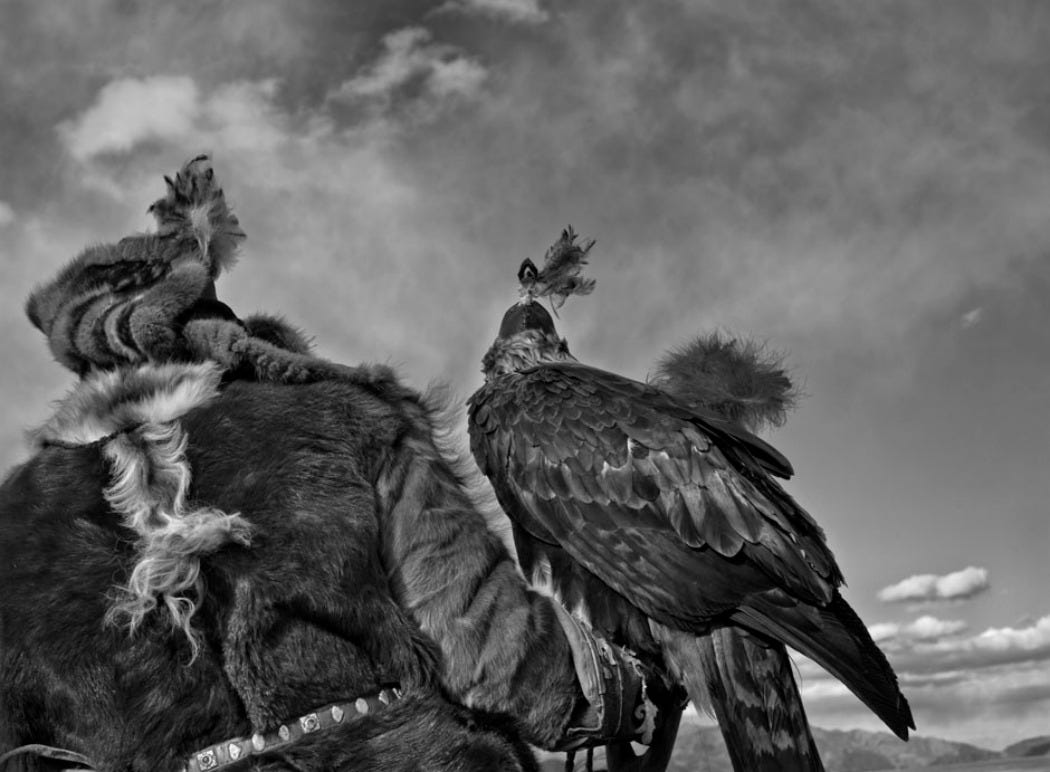
This intense relationship begins when a hunter takes an eaglet from its mother and back to his own home, promising to “love [the eagle] as his own.” There, he shrouds the bird with a leather hood (tomaga) to keep it calm, and begins hand-feeding it horse and yak meat. Once the bird learns to trust its feeder, it goes on its first hunt, which Mohan describes in the book.

This image has an empty alt attribute; its file name is 1*UqetmsSDgSoOJORYgWxyiw.jpeg

The golden eagle is a perfect predator, with an awe-inspiring [eight-foot] wingspan. A fox is easy prey, and when hunting in pairs, eagles are capable of bringing down a wolf.

The birds are calm and exude confidence when they head into the hunt. After the tomaga is lifted from its head and it sees the fox in the valley below, the eagle takes its time waiting for the right moment. Then, without warning, it will raise its wings and dive like a bullet, leaving a rush of air in its wake as the hunter makes a screeching sound, urging it on.

Within moments the eagle reaches its prey, sinking its claws through the fur and skin. Fox meat makes a welcome winter meal for the hunter and his family, while the pelt is kept as a trophy or made into hats and other items of clothing.

This image has an empty alt attribute; its file name is 1*pIQoWVksJXqDnt71eg2Vuw.jpeg

Golden eagles live till around 30 years of age, and are released back into the wild at about 15.

The hunters and their families wear their fur pelts proudly, along with elaborately embroidered robes and coats.

Golden eagles are like no other bird. They want to be with you. They love you. And they love to kill for you.

When the time comes to let them go, it’s the hardest thing a man can ever do. … I’ve had more than 20 eagles in my life. Last year I released my last eagle back into the mountains. It was as if a member of my family had left. …

This tradition is dying, and there are fewer and fewer old hunters these days. You can have an eagle, but that doesn’t make you a hunter.

In the old days, if you didn’t have an eagle next to your home you weren’t a real man. …

The young generation today aren’t interested, and there are many things that keep them busy, such as earning money and listening to music.…

We should train our children to keep this tradition alive. This is who we are. To the young I would say: the golden eagle is a holy bird; treat eagles as your children. Love and respect them. If you do this, they will give everything back to you.

RELATED SITES:

THE TED TALKPalani Mohan – Photographer | videos | 1
Palani Mohan’s Ted X talk at the Sydney Opera house in front of 3000 people on his bookwww.palanimohan.com

EXTENDED RADIO INTERVIEWPalani Mohan
The last eagle hunters of Mongolia through the lens of Palani Mohan.www.abc.net.au

PALANI MOHAN’S WEBSITEPalani Mohan – Photographer
Palani Mohan is an award-winning photographer based in Hong Kong.www.palanimohan.com

This image has an empty alt attribute; its file name is 1*sRLbRuZoVXyO2QA_2u0SuA.jpeg

Written and compiled by John Stapleton, editor of A Sense of Place Magazine. A collection of his journalism can be found here.

TODAY’S FEATURED BOOKS

“They Say Accident, We Say Murder”: Australia’s First Nations’ Custodial Deaths, As Editor, A Sense of Place Magazine, 17 April, 2021.


“They Say Accident, We Say Murder”: Australia’s First Nations’ Custodial Deaths

By Paul Gregoire: Sydney Criminal Lawyers Blog.

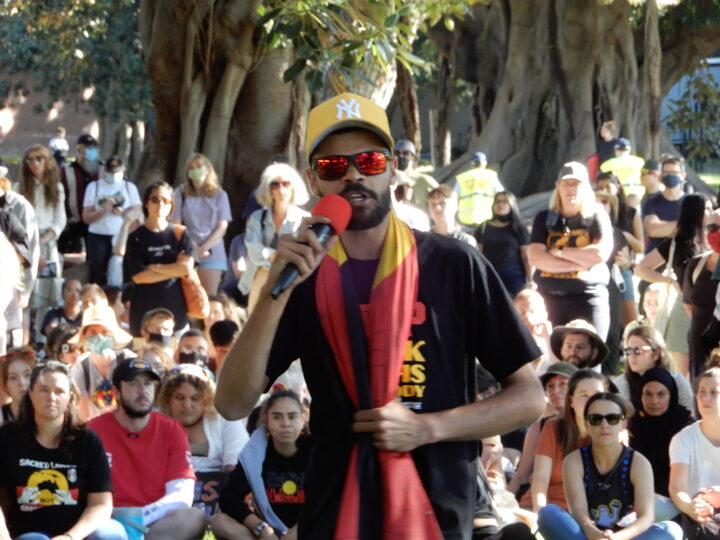
“This shows how our government facilities and systems will treat you if your skin colour is black,” declared Dunghutti activist Paul Silva at the 10 April Stop All Black Deaths in Custody Rally in Sydney. “They thrive on systematic racism and it’s killing our people.”

Just like African American man George Floyd, Dungay called out that he couldn’t breathe over and over until it was no longer possible. But the 26-year-old Dunghutti man didn’t have a knee on his neck, rather he had multiple officers pressing on his back as he was held down in the prone position.

As he addressed the crowd in Djarrbarrgalli-the Domain, Silva was referring to the NSW DPP and SafeWork NSW having rejected his family’s 2020 request to open a criminal investigation into the killing of his uncle David Dungay Junior at the hands of Long Bay prison guards in December 2015.

Dunghutti activist Paul Silva

David’s death is one of at least 474 First Nations custody deaths since the Royal Commission into these fatalities tabled its report on 15 April 1991. The rally was marking its 30th anniversary, as well as the current vision for change, which has intensified since last June’s Black Lives Matter uprising.

“Instead of killing us out in mass numbers,” Silva continued, “they’re killing us behind closed doors because they know the government will allow them to get away with the brutality and killings of First Nations people in custody.”

Coming recommendations

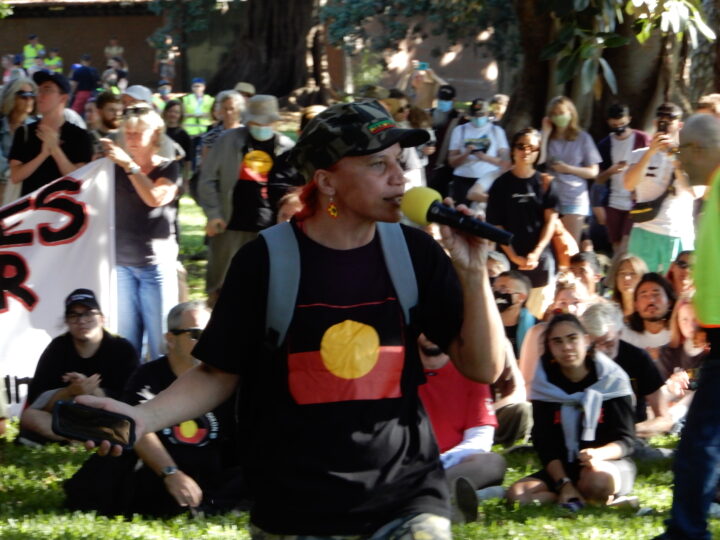
As she opened the rally at Sydney Town Hall, Gumbaynggirr Dunghutti Bundjalung woman Elizabeth Jarrett noted that while many that morning had been discussing the death of Prince Philip, the silence surrounding the recent five Aboriginal deaths in custody within a month was deafening.Elizabeth Jarret MCing at the rally

And while all of these deaths have been condemned, one stood out for particular consternation as it involved a 44-year-old Aboriginal woman taking her own life by hanging, despite the 165th Royal Commission recommendation stating hanging points should be removed from all cells in 1991.

Established in 1987, the national inquiry into First Nations custodial deaths handed down 339 recommendations, most of which have never been implemented. However, these overlooked reforms often resurface as issues within the findings of coronial inquiries.

While marking the three decades since the commission, the rally was also a march of anticipation, as the NSW parliamentary inquiry into First Nations overincarceration and custodial deaths is set to table its report with a fresh set of recommendations on 15 April this year.

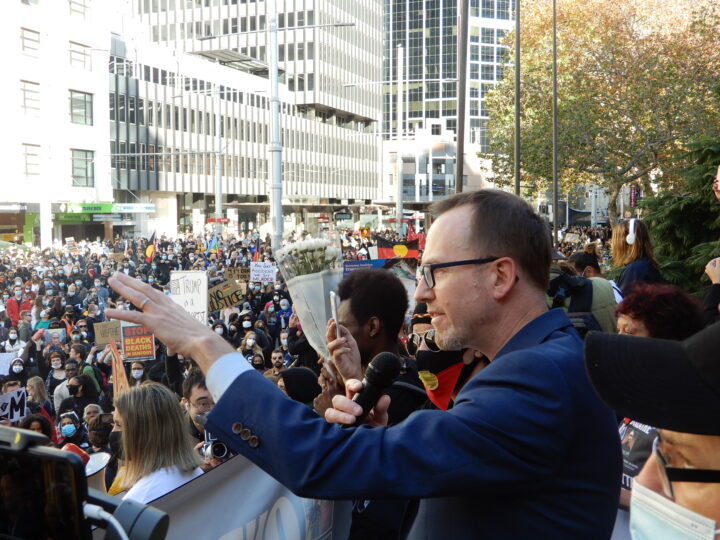
Having initiated the new inquiry, NSW Greens MLC David Shoebridge noted at the 2021 Invasion Day rally that if it wasn’t for the tens of thousands who mobilised in support of Sydney’s 6 June 2020 Black Lives Matter rally, he wouldn’t have been able to convince parliament to establish it.

NSW Greens MLC David Shoebridge

The math is not that simple

As First Nation’s custodial deaths have received a heightened focus over the last ten months, there have been a lot of comments appearing on social media along the lines of, why are we talking about Aboriginal deaths in custody, when there are more non-Indigenous custodial deaths?

So, Sydney Criminal Lawyers would like to take a few inches to address these assertions.

The National Deaths in Custody Program outlines that over the financial year 2018-19 there were 89 deaths in the custody of either police or corrections. And of these 73 were non-Indigenous, while 16 were First Nations.

However, these figures taken alone fail to tell the full story.

The 2016 Census found that Aboriginal and Torres Strait Islander peoples represented 2.8 percent of the nation’s overall population. Of the 24 million people living on this continent, just over 649,000 are First Nations people. And custodial deaths are making a deep impact on this small population.

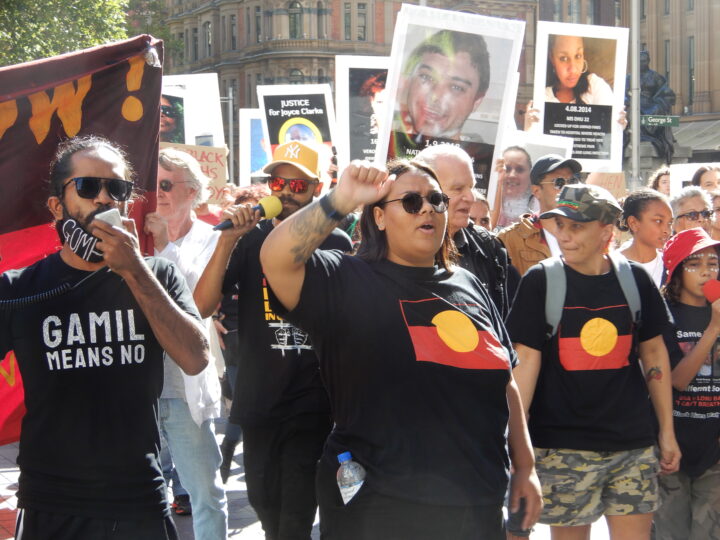
“These deaths aren’t invisible to our communities. They are highly visible,” Dr Chelsea Watego told the ABC last week. The academic also noted that the system disproportionately locks up First Nations people for matters that non-Indigenous people often aren’t imprisoned for.The March for Justice

Aboriginal and Torres Strait Islander people are more likely to be arrested, than the non-Indigenous. They are more likely to be imprisoned. They are more likely to be arrested and imprisoned over minor offences. And First Nations are more likely to be denied bail.

This systemic bias leads to stark overrepresentation in the prison systemABS custody statistics for December 2020 reveal that First Nations people – less than 3 percent of the nation’s total population – account for 29 percent of its adult prisoner population.

As well, Indigenous people enter into a prison system run by the invading force. A history of colonialism continues to see Aboriginal people brutalised and discriminated against on the inside. And the prison system all too often neglects their health needs.

Indeed, Aboriginal and Torres Strait Islander inmates are treated differently to the rest of the prisoner population. Just watch the footage of the treatment David Dungay JuniorWayne Fella Morrison or Ms Dhu were all subjected to in detention.

At last Saturday’s rally, the message was clear: too often are First Nations people entering the police and prison systems and coming out in body bags. And no one is ever held to account.

Say their names

Uncle Dave Bell brought the Stop Black Deaths in Custody march to a halt at the Sydney CBD intersection where College Street meets Prince Albert Road. And the Wiradjuri elder had the mass of protesters repeat the names of Aboriginal people who have lost their lives in custody.

These names included Eric Whittaker, David Dungay Junior, TJ Hickey, Tane Chatfield, Rebecca Maher, Patrick Fisher, Nathan Reynolds, Eddie Murray, Veronica Baxter and Wayne Fella Morrison.Gomeroi activist Gwenda Stanley demands tangible change
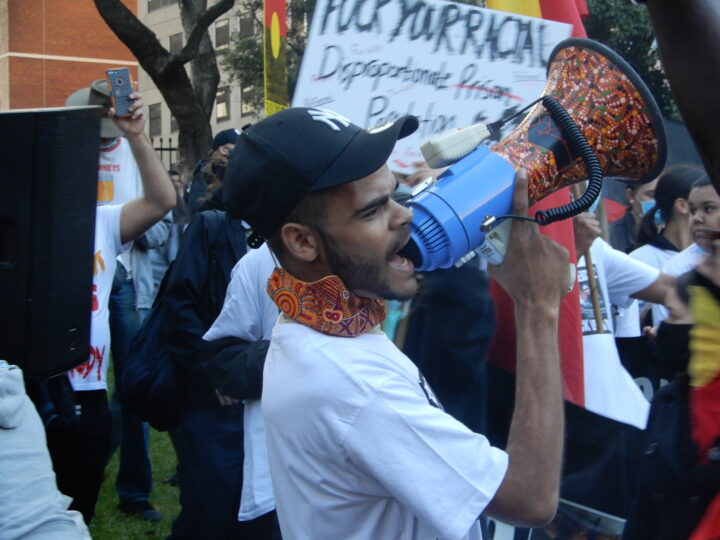
In addressing the crowd late in the day, FISTT (Fighting in Solidarity Towards Treaties) spokesperson Gwenda Stanley asserted that there ought to be more discussion around Royal Commission recommendations 334 through to 338, as these address sovereignty, treaty and land rights.

“How do you expect to heal, and our country to heal, when you keep removing and forcing us from Country?” the Gomeroi woman asked.

The recommendations Stanley pointed to set out that all jurisdictions should address the land needs of Aboriginal people, with unalienated Crown land being handed over to those who have a claim, so they control it. This should also be done with former Aboriginal reserve and mission land.

Where land can no longer be handed over due to the effects of colonisation, then land needs should be met via other means, including the provision of adequate funding. And recommendation 335 recognises that until land title is forthcoming, First Nations standards of living won’t improve.

“We have had enough of reconciliation. It is time now to draw the line,” Stanley made clear. “It is time now to start talking treaty. It is now time to start making reparations.”

“It is now time to start paying for the war crimes in this country.”